Artificial Intelligence (AI) has a beginning but no end and will evolve with time: Secretary, DST, Prof Ashutosh Sharma.
Dr Satyapriya Bhandari, from the Department of Chemistry, University of North Bengal, West Bengal, is fascinated by tiny nanoscale crystals emitting light of multiple colours when hit by ultraviolet light.
This recipient of the INSPIRE Faculty fellowship instituted by the Department of Science & Technology, Govt. of India, is using chemical reactions to modify the surface of these nanoscale crystals called quantum dots (QDs) for fabricating optical materials that can have sustainable applications in optical sensors, light-emitting usages, composites, and fluorescent biological labels.
Chemically modifying the surface of QDs can be an innovative pathway to alter their optical features and make newer visual materials, which help fabricate white light-emitting (WLE) materials, ratiometric sensors for detecting disease-responsive molecules or environmental pollutants, photocatalysts (for H2 production) and imaging of cancerous cells.
Dr. Bhandari’s chemically modified QDs could be used for ratiometric tracing of in vitro pH, detection of amino acid and vitamin B12, development of advanced WLE materials that can emit day-bright light, capability to image cancerous cells, and packaging of enzymes to enhance their activity.
The research was published in Chemical Communications, Advanced Optical Materials, Chemistry: An Asian Journal, and Nanoscale Advances. Dr. Bhandari has worked on constructing advanced, sustainable, and environment-friendly optoelectronic materials and sensors, setting a new paradigm in the area.
In collaboration with IIT Guwahati, he established a dual-emitting nanoprobe that can serve as a sensor for detecting Hg2+ and Cu2+ ions. The work has recently been published in the journal ‘Journal of Material Chemistry C’.
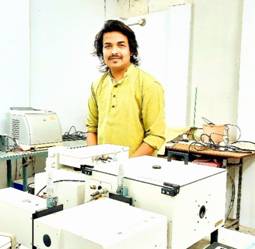
With the inspiring faculty fellowship, he is working on fabricating QD-based optical materials for advanced energy and sensing applications that can be used for household lighting, alternative fuel production, better human health monitoring, and a clean and sustainable environment.
Source: Press Release
Release ID: 1708890
PIB
Ministry of Science & Technology
Date: April 01, 2021

 Ananova
You must be logged in to post a comment.