America Leads Act To Confront The Rise Of China


Durbin, Senate Dems Unveil America Leads Act To Confront The Rise Of China

Legislation Makes Comprehensive Investments In American Workers, Competitiveness, Alliances, And Diplomacy Needed To Out-Compete China And Succeed In The 21st Century.

WASHINGTON – U.S. Senate Democratic Whip Dick Durbin (D-IL) today joined Senate Foreign Relations Committee Ranking Member Bob Menendez (D-NJ), Senate Democratic Leader Chuck Schumer (D-NY), and Senate Democrats to introduce the America Labor, Economic Competitiveness, Alliances, Democracy and Security (America LEADS) Act, Senate Democrats’ proposal for a new U.S.-China policy. The most comprehensive China legislation to date, the America LEADS Act, seeks to recognize that we can compete with China abroad only when we have a vibrant economy here at home.

The legislation provides significant new investments to rebuild the U.S. economy and provide our workers, entrepreneurs, researchers, and manufacturers with the skills and support needed to out-compete China and succeed in the twenty-first Century. The proposal includes more than $350 billion in new funding to synchronize and mobilize all aspects of U.S. national power. This approach is grounded in getting the broader Indo-Pacific strategy “right,” centred on our alliances and partnerships, animated by America’s longstanding values, and driven by the need for a course correction after almost four years of destruction under President Trump.

Durbin said: “Whether pursuing erratic, poorly thought out trade policies that hurt our farmers, cosying up to yet another dictator, ignoring the threat of COVID-19, or denying climate change, the Trump Administration has demonstrated an utter lack of strategic vision when it comes to China.

Our farmers and manufacturers have lost markets for their goods in four short years. China has rolled back democracy in Hong Kong and run internment camps for Uyghurs. And China has made diplomatic and economic inroads worldwide and on our doorstep. This bill outlines a coherent approach to China — working together where possible, standing up for human rights and democracy, and looking out for the American worker.”

Joining Durbin, Menendez, and Schumer in introducing the America LEADS Act were Senators Ron Wyden (D-OR), Sherrod Brown (D-OH), Patty Murray (D-WA), Jack Reed (D-RI), Mark Warner (D-VA), Amy Klobuchar (D-MN), Chris Van Hollen (D-MD), and Jeanne Shaheen (D-NH).

Four pillars guide the legislation:

  1. invest in American competitiveness;
  2. support American alliances and partners;
  3. restore and advance a values-centered foreign policy;
  4. ensure China pays the price for its predatory actions.

The America LEADS Act

America LEADS Act also includes provisions that

  • strengthen America’s diplomatic, economic, military, and soft power posture in the Indo-Pacific and around the globe;
  • promote democracy, human rights, and the rule of law; and
  • safeguard our nation’s innovation and creativity from China’s predatory trade and economic practices.

Most importantly, the America LEADS Act takes significant steps to replenish the sources of our competitiveness at home with substantial investments in American workers, education, scientific research, and our nation’s industrial base.

A Summary of the America LEADS Act can be found here and below.

  • It invests in American workers and restores the United States’ competitiveness in science and technology, manufacturing, global infrastructure, digital technologies, and global clean energy development. Thus, by increasing federal funding for research and development, including investment to lead in developing and producing new and emerging technologies like 5G, quantum, and artificial intelligence. That will define the twenty-first Century, taking action to strengthen domestic supply chains and providing support for domestic manufacturing industries like semiconductors.
  • Confronts China’s education and influence campaigns by requiring new reporting requirements and investing in registered apprenticeships, training, and STEM education programs focusing on building a diverse and inclusive innovation and manufacturing workforce for the 21st Century.
  • It renews and reorients the United States’ diplomatic strategy towards China and America’s commitment to its worldwide and Indo-Pacific region, including Japan, South Korea, the Philippines, Australia, Thailand, and Taiwan. And calls for the United States to reassert its leadership within regional and international organizations, like the World Health Organization and the G7.
  • It reaffirms America’s strong security commitment in the Indo-Pacific and a forward-deployed posture to ensure that all nations can exercise their rights in the region’s international waters and airspace. Directs the United States to provide additional assistance and training to countries under the Indo-Pacific Maritime Security Initiative. The bill also offers regional strategies to confront malign PRC influence in the Western Hemisphere, South and Central Asia, Africa, the Arctic region, and the Middle East and North Africa.
  • Invests in our values, authorizing various efforts to support human rights and civil society measures. Especially as they relate to Tibet, the Xinjiang Uyghur Autonomous Region (XUAR), and Hong Kong, including allowing certain Hong Kong citizens and residents of Xinjiang to apply for admission to the United States, the bill also directs the President to report foreign persons identified as engaged in and facilitating labour in China. Also, to apply sanctions to Chinese officials complicit in human rights violations.
  • It focuses on countering and confronting China’s predatory international economic behaviour. It includes measures to strengthen trade enforcement across various areas, including intellectual property, supply chains, currency manipulation, and counterfeit goods.

Source: Press Release Date: September 17, 2020 durbin.senate.gov

Benefitfocus Names Barry Libert to Board of Directors Platform


Benefitfocus Names Barry Libert to Board of Directors Platform and A.I. expert brings experience in digital business transformation.

Benefitfocus, Inc., today announces the appointment of Barry Libert to its board of directors, bringing the total number of Benefitfocus directors to seven. Libert is also a strategic advisor to BuildGroup, a significant investor in Benefitfocus, and joins Lanham Napier as BuildGroup’s second board member under their investment terms.

Mason Holland, an executive chairman, said: “Barry brings a wealth of experience in digital business models, and in particular AI-powered platforms to the Benefitfocus board. We look forward to his insight and counsel as we continue to expand our platform to deliver, enroll, and communicate benefits and health care solutions for our customers.”

Libert is an expert in digital business models, particularly platforms powered by artificial intelligence (AI). Throughout his career, Libert has advised CEOs and boards on transforming their business models from product to platform, customer to network, and data to AI to achieve exponential growth and value. Previous clients include Barrack Gold, iRobot, Neiman Marcus, and Salesforce. He began his career with McKinsey & Company, is a graduate of Tufts University (Magna Cum Laude), and holds an MBA from Columbia University (Beta Gamma Sigma).

Libert said: “I am very excited to join the Benefitfocus board and support the acceleration of its business model transformation. Benefitfocus’s ever-expanding platform of partners and consumers, with its ability to use A.I. and data, offers superior value for its customers, can lead to exponential growth. I look forward to being a part of that success.”

About Benefitfocus

A leading cloud-based benefits technology platform enabling rapid innovation for employers, health plans, and consumers/
The company unifies the entire U.S. benefits industry on a single technology platform to protect consumers for life.

Services Offered

Powerful cloud-based software, data-driven insights, and thoughtfully designed services. That enables employers, insurance brokers, health plans, and suppliers to simplify the complexity of benefits administration and deliver health, wealth, property, and lifestyle products a world-class benefits experience.

Source: Press Release
Charleston, S.C.
Date: September 15, 2020
Benefitfocus, Inc.
843-981-8898
pr@benefitfocus.com

Investor Relations:
Patti Leahy
843-981-8899
ir@benefitfocus.com

Aero India 21 website – Space Booking Opens for Asia’s Largest Aero Show


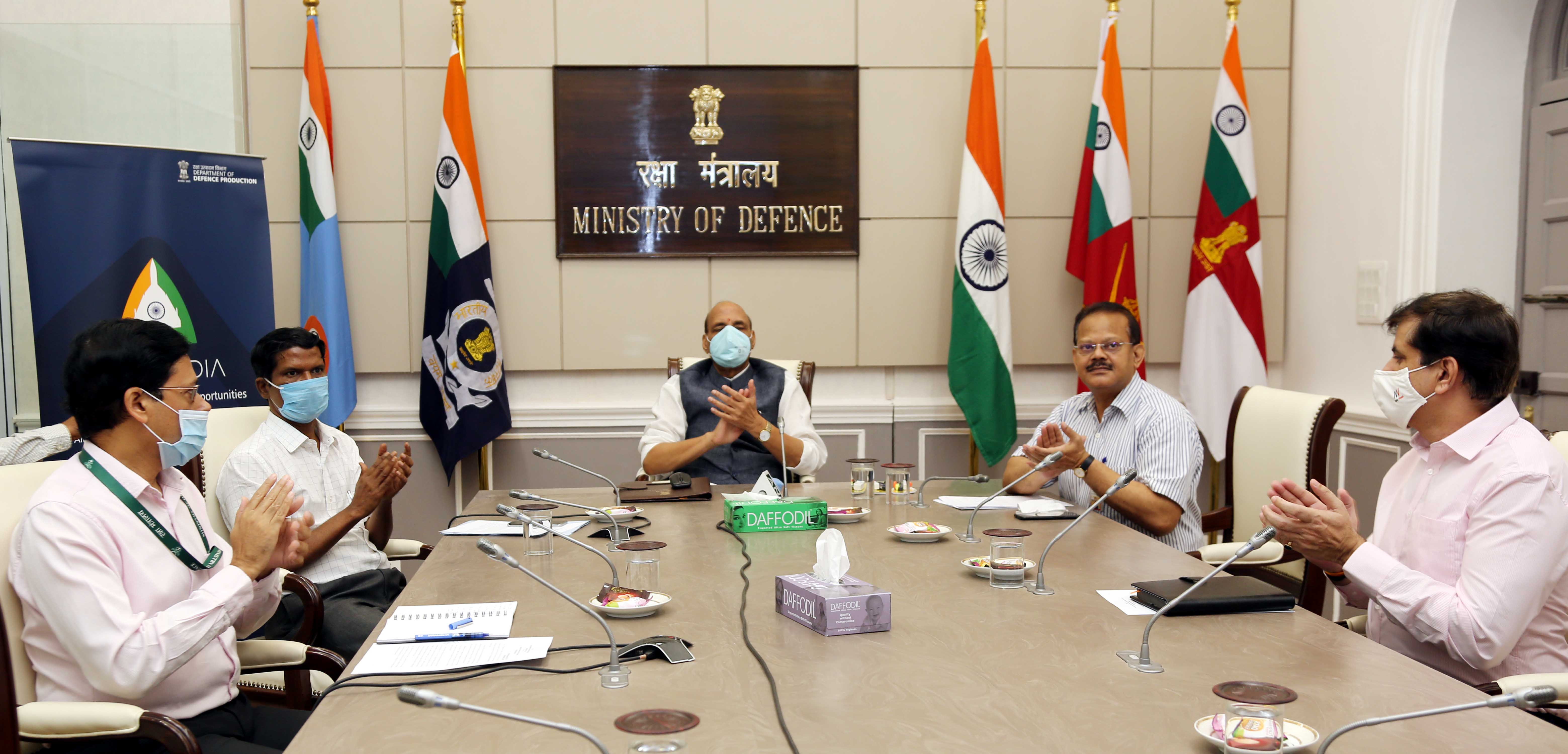
Raksha Mantri launches Aero India 21 website; Space Booking Opens for Asia’s Largest Aero show

The 13th edition of Aero India-21 will be held at Air Force Station, Yelahanka, Bengaluru, Karnataka, from 3rd to February 07, 2021. Raksha Mantri and Shri Rajnath Singh launched the Aero India 2021 website https://aeroindia.gov.in in New Delhi today, giving the go-ahead for space booking.

aeroindia.gov.in

The Aero India 2021 website will be a contactless online interface for Asia’s largest Aero show and host all online services related to exhibitors and visitors, besides hosting informative content about the Ministry of Defence’s current policies and initiatives and the product profile of indigenous aircraft and helicopters. Raksha Mantri conveyed his best wishes for the success of the event.

Raksha Mantri launches Aero India 21

Exhibitors can register and book space online per their requirements on a first-come, first-served basis and make all payments online on the Aero India website. Exhibitors can avail themselves of early-bird discounts by booking space on the website before October 31, 2020.

Business and other visitors can buy tickets online on the website to visit the show from 3rd-7th Feb 2021 during trade and public days. Media intending to circulate their publications and media persons can register on the website for event coverage. A query redressal and feedback mechanism have been incorporated into the website wherein exhibitors and visitors can send their queries/comments. The health protocols that will be implemented to ensure a safe event will also be available.

The website will be interactive and aims to provide the first of the numerous contactless experiences at the show and help build the participants’ confidence towards the event, being cognizant and conforming with prevailing pandemic-related guidelines and safeguards.

It may be recalled that during his recent visit to Russia, in his bilateral discussions, Raksha Mantri Shri Rajnath Singh referred to the Aero India-21 show and invited the participation of defence ministers and industry delegations of Russia and the Central Asian Republic countries.

Secretary (Defence Production) Shri Raj Kumar and other senior officials of the MoD were also present during the website’s launch. Source: Press Release Release ID: 1653267 Ministry of Defence PIB Delhi INDIA Date: September 11, 2020

$16 million for advanced research in machine learning (ML) and artificial intelligence (AI)


Today, the U.S. Department of Energy (DOE) announced it would provide $16 million for advanced research in machine learning (ML) and artificial intelligence (AI) for both scientific investigation and the management of complex systems.

The focus is on Physical Sciences Research and Management of Complex Processes.

The funding will support two sets of projects. The first set focuses on developing ML and AI for predictive modelling and simulation for research across the physical sciences.

The second set of projects focuses on essential ML and AI research for “decision support” in managing complex processes similar to those found in self-driving cars, where ML and AI can make or aid in making real-time decisions.

Dr. Chris Fall, Director of DOE’s Office of Science, said: “We are making enormous strides in adapting machine learning and artificial intelligence to a wide range of scientific and operational challenges. These projects will strengthen ML and AI as tools for scientific investigation and complex processes management.”

The projects, which are led by a mix of universities and DOE national laboratories, were chosen by competitive peer review under two separate DOE Funding Opportunity Announcements (along with parallel, companion DOE laboratory announcements), “Scientific Machine Learning for Modeling and Simulations” and “Artificial Intelligence and Decision Support for Complex Systems,” issued by the Office of Advanced Scientific Computing Research (ASCR) within DOE’s Office of Science.

The five modelling and simulation projects will be funded at $3 million over two years in the fiscal year 2020. The six decision support projects will be three years for $13 million, with $7 million in the Fiscal Year 2020 dollars and out-year funding contingent on congressional appropriations. Source: Press Release U.S. Department of Energy WASHINGTON, D.C. energy.gov News Media Contact: (202) 586-4940 Date: SEPTEMBER 9, 2020

Argonne scientists use artificial intelligence in a new way to strengthen power grid resiliency


Argonne scientists created a new artificial neural network model that handles a power system’s static and dynamic features with relatively high accuracy. With a new neural network, lab scientists helped create formulas to bridge a power system’s static and dynamic features — a difficult feat.

America’s power grid system is extensive but dynamic, making it incredibly challenging to manage. Human operators know how to maintain systems when conditions are static. But when conditions change quickly due to sudden faults, operators lack a straightforward way of anticipating how the system should best adapt to meet system security and safety requirements.

At the U.S. Department of Energy’s (DOE) Argonne National Laboratory, a research team has developed a novel approach to help system operators understand how to control power systems with the help of artificial intelligence. According to a recent article in IEEE Transactions on Power Systems, their new approach could help operators manage power systems more effectively, enhancing the resilience of America’s power grid.

Converging dynamic and static calculations

The new approach allows operators to make decisions considering static and dynamic power system features in a single decision-making model with better accuracy — a historically tough challenge.

Argonne computational scientist Feng Qiu, who co-authored the study, said: “The decision to turn a generator off or on and determine its power output level is an example of a static decision, an action that does not change within a certain amount of time. Electrical frequency, though — which is related to the speed of a generator — is an example of a dynamic feature. It could fluctuate over time in case of disruption (e.g., a load tripped) or operation (e.g., a switch closed). If you put dynamic and static formulations together in the same model, it’s essentially impossible to solve.”

In power systems, operators must hold frequency within a specific range of values to meet safety limits. Static conditions, such as the number of generators online, affect the system’s ability to have a frequency and other dynamic features.

Most analysts calculate static and dynamic features separately, but the results fall short. Meanwhile, others have tried to develop simple models that can bridge both types of calculations. Still, these models are limited in scalability and accuracy, particularly as systems become more complex.

Artificial neural networks connect the dots between static and dynamic features.

Rather than trying to fit existing static and dynamic formulas together, Qiu and his peers developed an approach for creating new recipes that could bridge the two—their approach centres on using an artificial intelligence tool known as a neural network.

Yichen Zhang, Argonne postdoctoral appointee and lead author of the study, said: “A neural network can create a map between a specific input and a specific output. If I know the conditions we start with and those we end with, I can use neural networks to figure out how they map to each other.”

While their neural network approach can apply to bulk-power systems, the team tested it on a microgrid system, a controllable distributed energy resource network, such as diesel generators and solar photovoltaic panels.

The team used the neural network to track how a set of static conditions within the microgrid system mapped to a group of dynamic needs or values. More specifically, researchers used it to optimize the static resources within their microgrid so the electrical frequency stayed within a safe range.

Simulation data served as the inputs and outputs for training their neural network. The information was static data, and the results were dynamic responses, specifically the safe range of frequencies. When the researchers passed both data sets into the neural network, it ​”learned” to map estimated emotional responses for a group of static conditions.

Qui said: “The neural network transformed the complex dynamic equations that we typically cannot combine with static equations into a new form that we can solve together.”

Opening doors for new types of analyses

Researchers, analysts, and operators can use the Argonne scientists’ approach as a starting point. For example, operators could potentially use it to anticipate when they can turn generation resources on and off while at the same time ensuring that all the online resources can withstand specific disruptions.

Argonne postdoctoral appointee and co-author Tianqi Hong said:
“It is the kind of scenario that system operators have always wanted to analyze, but were unable before too because of the challenges of calculating static and dynamic features together. Now we think this work makes this type of analysis possible.”

Argonne’s Electric Power Grid Program director Mark Petri said: “We’re excited by the potential for this analytical approach. For instance, this could provide a better way for operators to quickly and safely restore power after an outage, a problem challenged by complex operational decisions entangled with system dynamics, making the electric grid more resilient to external hazards.”

DOE’s Office of Electricity, Advanced Grid Modeling Program supports this work using Argonne’s Laboratory Computing Resource Center.

Argonne National Laboratory seeks solutions to pressing national problems in science and technology. Argonne, the nation’s first national laboratory, conducts leading-edge basic and applied scientific research in virtually every scientific discipline. Argonne researchers work closely with researchers from hundreds of companies, universities, and federal, state and municipal agencies to help them solve their specific problems, advance America’s scientific leadership and prepare the nation for a better future. With employees from over 60 countries, Argonne is managed by UChicago Argonne, LLC, for the U.S. Department of Energy’s Office of Science.

The U.S. Department of Energy’s Office of Science is the most prominent supporter of basic research in the physical sciences in the United States and is working to address some of the most pressing challenges of our time.

Source:

Press Release JOAN KOKA ​ener​gy​.gov/​s​science

Date: AUGUST 20, 2020

Awards announced for Indo-U.S. Virtual Networks for COVID-19


Eight binational teams of researchers from India and the U.S. have received awards to pursue cutting-edge research in the pathogenesis and disease management of COVID-19 through Indo-US virtual networks. The areas of study they will pursue include antiviral coatings, immune modulation, tracking SARS CoV-2 in wastewater, disease detection mechanisms, reverse genetics strategies, and drug repurposing.

 The Indo-US Science and Technology Forum (IUSSTF) announced the awards to eight binational teams, consisting of leading researchers from India and the U.S., for COVID-19 Indo-U.S. Virtual Networks in support of the efforts of the medical and scientific community to find solutions to the COVID 19 pandemic and emerging global challenges. The IUSSTF is an autonomous bilateral organization jointly funded by the Governments of India and the U.S. that promotes Science, Technology, Engineering, and Innovation through substantive interaction among government, academia, and industry. The Department of Science & Technology, the Governments of India, and the U.S. Department of State are respective nodal departments.

 The eight teams are among the best few who had submitted proposals in response to an invitation of proposals to harness the combined expertise of the Indian and U.S. Science and technology communities, facilitate partnerships between teams of Indian and U.S. scientists and engineers currently engaged in COVID-related research, and leverage existing infrastructure from both countries to advance the research further and accelerate progress.

 Following a rigorous binational peer-review process, these eight teams will be pursuing cutting-edge research in areas that include studies on pathogenesis and disease management in COVID-19, antiviral coatings, immune modulation, tracking SARS CoV-2 in wastewater, disease detection mechanisms, reverse genetics strategies, and drug repurposing.

 Congratulating the teams, the Co-Chairs of the bilateral IUSSTF highlighted the importance of the US-India partnership. Professor Ashutosh Sharma, Secretary, Department of Science and Technology, Government of India and IUSSTF India Co-Chair, said, “an overwhelming response in a short time to the special call on COVID-19 demonstrates a wide spectrum of cooperation between India and USA from the basic studies on the behavior of SARS-Cov-2 virus to its transmission to diagnostics and therapeutic approaches. Our existing strong cooperation in S&T on health, energy, artificial intelligence and so on. also continues to bring value and attests to the importance of Indo-US collaborations in providing compelling solutions.”

 Dr. Jonathan Margolis, Deputy Assistant Secretary for Science, Space and Health, Bureau of Oceans and International Environmental and Scientific Affairs, U.S. Department of State, and IUSSTF U.S. Co-Chair remarked, “we are pleased that the United States and India were able to quickly mobilize, through IUSSTF, to support jointly developed innovations to fight COVID-19. Our people and economies both rely on science and technology to identify tools to address the pressing challenges of the current pandemic”.

Global challenges call for international collaborations and partnerships, a shared vision bringing together the best and brightest scientists, engineers, and entrepreneurs to find solutions to address the current pandemic and the challenges ahead. “Through the sharing of expertise across scientific communities and geographic boundaries, the Indo-US Virtual networks will enable breakthroughs, leading to the development of innovative and transformative solutions to combat this pandemic”, said Dr Nandini Kannan, Executive Director of IUSSTF.

 The mission of the binational Indo-US Science and Technology Forum is to act as a catalyst to promote long-term scientific collaborations between India and the United States through partnerships among individual scientists, scientific institutions, and the scientific community at large.

Source: Press Release
Release ID: 1646582
Date: August 18, 2020
PIB Delhi
Ministry of Science & Technology

ASPIRE Automotive technology e-portal


Department of Heavy Industry (DHI), Govt of India, has embarked on a mission to promote innovation, R&D, and product development in India for various sectors. With the vision of ‘AatmaNirbhar’ Bharat, the step towards this is creating technology platform e-portals where such technology development, information exchange, and innovation are facilitated.

Five portals were developed for specific sectors by different organizations: BHEL for power sector equipment, HMT for machine tools, CMFTI for manufacturing technology, ICAT, and ARAI for the automotive industry. The portals aim to create an ecosystem to bring together solution-seekers and problem-solvers. These include industry, academia, research institutes, start-ups, professionals, and experts.

International Centre of Automotive Technology(ICAT) developed a technology platform for the automotive industry called ASPIRE. Automotive technology e-portal, as a one-stop solution for the Indian automobile industry. It made its initial version on July 15, 2020, as Phase I of an Automotive Solutions Portal for Industry, Research, and Education. This phase includes connecting the users and experts on the portal for functionality assessment.

Phase II of the portal is expected by August 15, 2020. It would include posting domain-specific challenges, team formation, and finalizing the milestones for the execution of projects for the said challenges and industry problems. The portal is expected to be fully functional, hosting the Grand Challenges and providing an elaborate resource database and project monitoring and execution by September 15, 2020.

A technology platform that will help bring together the various stakeholders from the Indian auto industry, providing the necessary impetus for ushering the industry into the future with combined efforts. It includes bringing together the automotive OEMs, Tier 1, Tier 2 & Tier 3 companies, R&D institutions, and academia (colleges & universities) on matters involving technology advancements.

The key objective is to facilitate the Indian automotive industry’s becoming self-reliant by assisting in the innovation and adoption of global technological advancements and bringing together stakeholders from various associated avenues.

The activities include Research and Development, Product Technology Development, Technological Innovations, Technical and Quality Problem Resolution for the industry, Manufacturing and Process Technology Development, hosting Challenges for Technology Development, and conducting Market Research and Technology Surveys to identify the trends in the Indian auto industry.

Apart from acting as a solution and resource platform, the portal will also host grand challenges in line with the industry’s needs, as will be identified occasionally for developing vital automotive technologies.

The measures developed to develop a solid and self-reliant automotive industry in India, which is in tune with the vision of Make in India and the Atma-Nirbhar vision of India’s government.

Date: July 17, 2020
Press Release ID: 1639395
PIB Delhi

AatmaNirbhar Bharat App Innovation Challenge Extended


Given the enthusiastic response from tech entrepreneurs and Startups across the country to the Aatma Nirbhar Bharat App Innovation Challenge, the Government is extending the last Date for Aatma Nirbhar App Innovation Challenge entries to July 26, 2020. The 2353 entries have been received across the eight categories identified.

The category-wise breakup of the Apps submitted includes 380 under Business, 286 under Health & Wellness, 339 under E-Learning, 414 under Social Networking,136 under Games, 238 under Office & Work from Home, 75 under News and 96 under Entertainment, around 389 Apps were submitted under the ‘others’ category.

Total entries include 1496 from individuals and about 857 from organizations and companies. Amongst those received from Individuals, around 788 applications are ready to use, and the remaining 708 are under development. For the Apps submitted by organizations, 636 Apps have already been deployed, and the remaining 221 are under development.

On July 04, 2020, Prime Minister Narendra Modi launched the AatmaNirbhar Bharat App Innovation Challenge Modi. The Challenge is hosted on the Innovate Portal of MyGov, and to participate, one can log in to https://innovate.mygov.in/app-challenge/.

Around 100 of these Apps have more than 100,000 downloads. The applicants are from all over the country, including remote and small towns. It shows the talent in our country, and this App Innovation Challenge is the right opportunity for Indian Tech Developers, Entrepreneurs, and companies to build for India at an unparalleled scale anywhere in the World. The real Challenge will be identifying robust, scalable, secure apps with an easy-to-use interface and giving users an experience that will make them return to the app.

The AatmaNirbhar Bharat App ecosystem can unlock value for Indian tech startups and help them get a piece of the multi-trillion-dollar app economy. This year, the top 3 companies with the maximum downloads of Apps have a total market cap of almost 2 trillion $s and are growing very fast.

The startups’ capability to build innovative solutions also proved with the enthusiastic response received for the Video Conferencing Innovation Challenge launched last month, which saw over 2000 applications, out of which 12 were shortlisted to make prototypes. Given the quality of solutions submitted, the Jury had to expand the list from 3 to 5, as all of them were found to have the skill set to build full-scale solutions.

The top 3 companies include Sarv Webs from Jaipur, PeopleLink from Hyderabad, and Techgentsia from Alappuzha. They have been rewarded with a grant of Rs 20 lakhs each to build the full-scale solution. The two companies ranked 4th and 5th by the Jury include Soulpage from Hyderabad and Hydrameet from Chennai. They were given a grant of Rs 15 lakhs each and are also building a full-scale solution. Four companies, namely Aria Telecom from Ghaziabad, VideoMeet from Jaipur, VacSetu from Delhi, and Zoho from Chennai, were also considered to have significant potential by the Jury. This Challenge has proved that our tech companies can build world-class solutions given the right push. Source: Press Release ID: 1639371 Date: July 17, 2020 PIB Delhi

Financial Technology (FinHub)


The U.S. Securities and Exchange Commission (SEC) announced the launch of the agency’s Strategic Hub for Innovation and Financial Technology (FinHub). The FinHub will serve as a resource for public engagement on the SEC’s FinTech-related issues and initiatives, such as distributed ledger technology (including digital assets), automated investment advice, digital marketplace financing, and artificial intelligence/machine learning. The FinHub also replaces and builds on several internal working groups at the SEC that have focused on similar issues.
The FinHub will:

  • Provide a portal for industry and the public to engage directly with SEC staff on innovative ideas and technological developments;
  • Publicize information regarding the SEC’s activities and initiatives involving FinTech on the FinHub page;
  • Engage with the public through publications and events, including a FinTech Forum focusing on distributed ledger technology and digital assets planned for 2019;
  • Act as a platform and clearinghouse for SEC staff to acquire and disseminate information and FinTech-related knowledge within the agency and
  • Serve as a liaison to other domestic and international regulators regarding emerging technologies in financial, regulatory, and supervisory systems.

The SEC’s FinHub will be led by Valerie A. Szczepanik, Senior Advisor for Digital Assets and Innovation and Associate Director in the SEC’s Division of Corporation Finance, and staffed by representatives from the SEC’s divisions and offices who have expertise and involvement in FinTech-related issues.

“The SEC is committed to working with investors and market participants on new approaches to capital formation, market structure, and financial services, to enhance and reduce investor protection,” said SEC Chairman Jay Clayton. “The FinHub provides a central point of focus for our efforts to monitor and engage on innovations in the securities markets that hold promise, but also require a flexible, prompt regulatory response to execute our mission.”
“SEC staff across the agency have been engaged for some time to understand emerging technologies, communicate the agency’s stance on new issues, and facilitate beneficial innovations in the securities industry,” said Ms. Szczepanik. “By launching FinHub, we hope to provide a clear path for entrepreneurs, developers, and advisers to engage with SEC staff, seek input, and test ideas.”

Source
Date: Washington D.C., Oct. 18, 2018
The U.S. Securities and Exchange Commission (SEC)

Accessing A Protected Computer Without Authorization And Recklessly Causing Damage


U.S. Attorney Peter G. Strasser announced that CARLOS DAVID IRIAS, age 47, a Cutler Bay, Florida, resident, pleaded guilty before United States District Judge Greg G. Guidry to a one-count bill of information. He was charged with intentionally accessing a protected computer without authorization and recklessly causing damage, resulting in loss to Company A in New Orleans, Louisiana.

According to court documents, IRIAS employed from about 2012 until August 14, 2017, for more than $5,000 for one year, in violation of 18 U.S.C.” 1030(a)(5)(B) and 1030(c)(4)(A).
The company develops and distributes specialized urological medical devices, including scopes and laser fibres.

IRIAS was responsible for designing marketing templates, coordinating sales, and developing client contacts. IRIAS terminated his employment with Company A on August 14, 2017. After that time, he was no longer authorized to access Company A’s cloud-based server, which handled marketing-related functions, including storing email contact lists and marketing templates and brochures.

On November 2, 2018, IRIAS accessed Company A’s secured cloud-based computer system from his Cutler Bay, Florida home without authorization. After that, he exported the contents to a server under his control. He then deleted the information from the cloud-based system. As a result of the unauthorized intrusion, Company A could not conduct marketing campaigns from about November 2018 until October 2019.

Company A was also unable to contact and communicate with its customer base for approximately two or three months, jeopardising its reputation in the specialized field in which it operated. As a result of such conduct, IRIAS recklessly caused damage to Company A for approximately $14,593.

IRIAS faces a maximum term of five (5) years in prison, a fine of up to $250,000.00, up to three (3) years of supervised release after imprisonment, and a mandatory $100 special assessment. Sentencing before Judge Guidry has been scheduled for October 15, 2020, at 2:00 pm.

U.S. Attorney Strasser praised the work of the Federal Bureau of Investigation in investigating this matter. Assistant United States Attorney Jordan Ginsberg, Supervisor of the Public Corruption Unit, is responsible for the prosecution. Source: Department of Justice U.S. Attorney’s Office Eastern District of Louisiana FOR IMMEDIATE RELEASE Thursday, July 9, 2020