Nothing to fear about Artificial Intelligence (AI); should harness it for organizational and social good: Piyush Goyal


Union Minister for Railways & Coal addresses the Conference organized by CRIS on AI for Innovations in Consumer Experience & Service Delivery.

“Artificial Intelligence (AI) can transform Indian Railways in terms of safety; passenger amenities; better revenues, growth & efficiency,” said Shri Piyush Goyal while addressing the AI Conference in New Delhi today. The Union Minister for Railways and Coal, Shri Piyush Goyal, was speaking at the valedictory session of the Conference organized by the Centre for Railway Information System (CRIS), an Information Technology arm of the Ministry of Railways today. The Minister said Artificial Intelligence is nothing to fear or feel threatened by but to be used for our benefit. Harnessing AI for organizational and social good can yield far-reaching benefits to our country and Indian Railways, the Minister emphasized. “Artificial Intelligence has to be harnessed to find digital innovations for better customer interface and better service delivery. Artificial Intelligence is about creating trains with brains”, Shri Goyal added. The Minister hoped that Indian Railways would benefit from the experiences shared by the experts who participated in the Conference today.

CRIS organized a day-long conference with invigorating technical sessions on Ártificial Intelligence for Customer Experience and Service Delivery innovations. Indian Railways plays a vital role in India’s growth story. The challenge is to improve revenues and enhance customer experience while improving the efficiency and reliability of operations. The speakers discussed how artificial intelligence can help improve customer experience and increase payments.

It was noted that AI can help in route optimization, real-time train movement monitoring, crew fostering, improving the price advantage of rail freight, and improving logistics chain integration. Speakers also highlighted the benefits of using Artificial Intelligence in predictive maintenance to improve asset management, Crowd management, chatbots for consumer interaction in different regional languages, and IoT sensors to detect concerns on tracks and locomotives.

The conference was inaugurated by Shri Ashwani Lohani, Chairman of the Railway Board & Shri Mohd Jamshed, Member of Traffic, Railway Board, senior board members, and Railway officials. The confeConferencedistinguished speakers from the IT Industry.

Speaking on the occasion, Shri Ashwani Lohani, Chairman of the Railway Board, said, “Artificial intelligence has the potential to create an ecosystem that makes the lives of humans more comfortable. In this context we need to explore how these technological developments can be garnered to create a more pleasurable rail travel experience. Future has unlimited possibilities, and Railways being a mass transporter, any effort in this direction will yield big benefits.” CRB added that despite technology, empathy in finding solutions for passenger comfort has to be the driving spirit.

Indian Railways is poised to utilize Artificial Intelligence in multiple ways. Applying Artificial Intelligence tools and techniques can significantly benefit customer experience, process optimization, and asset maintenance.

Artificial intelligence (AI) is the simulation of a human brain function by machines. AI machines can perform human mind activities, such as logical reasoning, learning, and self-correction.

Source: Press Release
Release ID: 1526336
PIB
Ministry of Railways
Date: March 24, 2018

Article Writing, Publishing and the Benefits to Your Business


Benefits of Article Writing

Disseminating information to many people, advertising, and publicity are the main benefits of writing articles. When something is written on a topic and a person who reads it gains some knowledge and passes it on to others, it results in popularity.

Effect of Article Writing on Business Website

The above concept is also applied in the field of business. To succeed in your business, you need a good customer database; reaching them with your business products and services is the first. So, article writing is considered an essential factor here. When articles are written on your business website about your business organization/products. You are manufacturing or selling, and regarding other important things, people read articles and know about you and your business. People will discuss the same with others, which leads to advertising and publicity of your business, which converts them into your customers and finally results in a successful business.

Nowadays, almost everyone has a business or commercial website for their organization, and the main reason behind building the same is its online presence and popularity. So, articles are added to your business website, which may provide excellent and satisfactory results.
Writing and publishing articles on the right blogs, directories, and websites is essential as they provide good publicity for your products and services. Areas or blogs where your essays are uploaded or published play an important role.

If you want your business website to get noticed, there are several ways of doing the same, but article writing and publishing the same is the most prominent way. Using the same method, if someone searches for your business organization or site via a search engine, your site reaches the top of search engine results and creates brand awareness among several people. Overall, writing articles and uploading or publishing those on the right blog positively affect business websites.

Improvising Different Articles

It is required that every article you write must be different from other articles, and you must decide the directory of the article and where it will be posted. There are various article directories for every article. Thousands of links are generated on your site if various articles about your products and services are continuously written, which leads to improved search results.

What are the areas for publishing the articles?

The areas where your articles are getting uploaded or published. Posting in an appropriate place is also essential unless publishing the same fails. Areas or blogs where your essays are uploaded or posted are websites, blogs, RSS feeds, directories, social bookmarking sites and others.

Blogs or businesses offering the same products and services as your business offers, you may connect or join them in the discussions, provide some good input, and offer excellent and valuable advice. This will allow you to gain some integrity in your area of expertise or your working field and see that hundreds and thousands of links are generated back to your site.

Everyone has their subject, and I write an article on them weekly. After a few months, it is the best option that leads your website to crawl search engines because every article you write will generate a link to your site.

With all this, there is one more important option which is necessary for you to remember:: links given at the end of your article do not point to your website’s home page; they can point to other particular web pages in your website, which is known as the deep linking.

For instance, if your organization sells clothes for females, you may have the links point to your home page or any other internal-specific web page on your site, such as Skirts. Then, you may have the option to write an article on the Skirts and generate the link to the page where your article on Skirts is written.

As E-Commerce rapidly grows and every business organization is selling their products and services online, allow people to learn or gain something from your knowledge as you are an expert in your subject, get a few forums in the industry to which your organization belongs, talk about this much which leads to offering benefits to you and thus your website.

English rendering of PM’s address in Mann Ki Baat Programme (Episode -41, 25 February 2018)


My dear countrymen, Namaskar.

Let us begin today’s’ Mann Ki Baat with a phone call.

Phone Call…

Thank you very much for your phone call. My young friends have asked me many questions related to Science; they keep writing on quite a few points. All of us have seen that the sea appears blue, but we know from routine life experiences that water has no colour. Have we ever thought about why water acquires colour in rivers and oceans? The same thought occurred to a young man in the 1920s. The same question gave rise to a great scientist of modern India. When we talk about Science, the first name that strikes us is Bharat Ratna Sir C.V. Raman. He was awarded the Nobel Prize for his outstanding work on light scattering. One of his discoveries is famous as the Raman Effect.

 We celebrate February 28 as National Science Day since, on this very day, he is said to have discovered the phenomenon of light scattering, for which the Nobel Prize was conferred upon him. This land has given birth to many great scientists. On the one hand, there has been a tradition of great Mathematicians like Bodhayan, Bhaskar, Brahmagupt, and Aryabhatt; on the other, in the field of medicine, Sushrut & Charak have bestowed upon us a place of pride. Sir Jagdish Chandra Bose, Har, Gobind Khurana, and Satyendranath Bose have brought laurels to India. The famous particle BOSON has been named after Satyendranath Bose. I recently got an opportunity to participate in a programme in Mumbai – the inauguration of the Wadhwani Institute for Artificial Intelligence. It was interesting to learn about the ongoing miraculous accomplishments in Science. Artificial Intelligence aids in making robots, Bots, and other machines for specific tasks. Through self-learning, devices today can enhance their intelligence to a more competent level. This technology can be harnessed to better the lives of the underprivileged, the marginalized, and the needy. In that programme on Artificial Intelligence, I urged the scientific community to deliberate on how Artificial Intelligence could help us make life easier for our diverse brothers & sisters. Can we make better predictions of natural disasters using Artificial Intelligence? Can we use it to provide assistance to farmers on crop yield? Can Artificial Intelligence be used as a tool to simplify the outreach of health services and modernize medical treatment?

         A few days ago, I accompanied the Prime Minister of Israel to Ahmedabad, Gujarat, to inaugurate ”I create”. A young person referred to developing a digital instrument that converts the written word into voice. This is to aid those incapable of speech to converse generally like anyone else. I feel we can harness Artificial Intelligence in many such fields.

         Science and Technology are value-neutral. They don’t’ possess any value in themselves. Any machine will work the way we want it to. It entirely depends on us what task we want it to perform. Here, human objectives assume significance: using Science for the sole purpose of human welfare to assist human lives to the most incredible heights.

         Thomas Alva Edison, the inventor of the light bulb, failed many times in his experiments. Once asked about it, he quipped, “”I have devised ten thousand ways of how NOT to make a light bulb””. I mean that Edison transformed even his failures into his strengths. Coincidentally, I am fortunate today to be in Auroville, the land, the karmabhoomi of Maharshi Arvind. As a revolutionary, he challenged British rule, fought against them, and questioned subjugation. Thus, as a great sage, he examined every facet of life. Extracting answers, he showed the right path to humanity. The relentless quest to ask questions to know the truth is fundamental. And this is the very essence, the real inspiration behind scientific inventions and discoveries. Never rest till every ”why”, ”what” & ”how” are answered. I congratulate our scientists and all those connected with Science on National Science Day. May our young generation be inspired for the quest for truth & knowledge; may they be motivated to serve society through Science. I wish them the best.

         Friends and safety in crises and disasters are topics on which many messages keep coming, and people keep writing to me. In a comment posted on Narendra Modi Mobile App, Shriman Ravindra Singh from Pune has referred to occupational safety. He writes that safety standards at factories and construction sites are not up to the mark in our country. Since March 4 is National Safety Day, the Prime Minister should include safety in the Mann Ki Baat programme to raise safety awareness. Regarding public safety, two aspects are fundamental- proactiveness and preparedness. Safety is of two kinds – one is safety during disasters, and the other is safety in everyday life. If we are unaware of safety in daily life and cannot attain a certain level, it will get tough. Wdisasteread signboards on streets bearing lines such as – ‘सतर्कता हटी – दुर्घटना घटी’ – ‘Lose alertness – invite mishaps’ or ‘एक भूल करे नुकसान, छीने खुशियां और मुस्कान’ – ‘One mistake can cost you dear- rob you of your joy & smile’ or इतनी जल्दी न दुनिया छोड़, सुरक्षा से अब नाता जोड़ो – ‘Don’t be in a hurry to leave this world – embrace the culture of safety’ orसुरक्षा से न करो कोई मस्ती वर्ना जिन्दगी होगी सस्ती – ‘Don’t play around with safety, your life will be treated cheap’. Beyond that, these sentences serve no purpose in our lives. Leave aside natural disasters; most mishaps result from our mistakes or others. If we stay alert and abide by the prescribed rules & regulations, we shall not only be able to save our own lives but also prevent catastrophes from harming society. Sometimes, many workplace safety slogans come across, but none follow their letter and spirit. I urge the fire brigade under corporations and municipalities to visit school children once a week or once a month and perform mock drills for them. This will have a dual benefit – the fire brigade will undergo a readiness exercise, and the new generation will learn alertness. And all this at no added cost. It will be a natural part of the overall learning curve. India is a land of geographic and climatic diversities. As far as disasters are concerned, this country has borne the brunt of many natural and man-made disasters, such as chemical & industrial mishaps. Today, the National Disaster Management Authority, NDMA, is the vanguard when dealing with disasters in the country. During earthquakes, floods, cyclones, and landslides, NDMA reaches the area within no time. They have issued guidelines and keep imparting training regularly for capacity building. In Districts prone to floods and cyclones, an initiative named ”Aapada Mitra” has been launched to train Volunteers. Training and awareness have a vital role to play. Two to three years ago, thousands of people would lose their lives every year due to heat waves. After that, NDMA organized workshops on heatwave management as part of a campaign to raise awareness among people. Mass participation led to good results. In 2017, the death toll on account of heatwave remarkably came down to around 220 or so. This proves that if we prioritise safety, we can attain safety. I laud the role played by innumerable individuals and citizens who immediately embark upon rescue and relief operations wherever a disaster strikes. And there are numerous such unnamed, unsung heroes. Our Fire and rescue services, National Disaster Response Forces Armed Forces, Paramilitary Forces… these brave hearts go beyond the call of duty to help people in distress, often risking their own lives. Organizations like NCC and Scouts also contribute to this task; they are getting trained, too. Recently, we have attempted to have a joint exercise for disaster management between countries on the lines of joint military exercises involving different countries worldwide. India has made a pioneering effort – BIMSTEC, Bangladesh, India, Myanmar, Sri Lanka, Thailand, Bhutan & Nepal – a joint disaster management exercise involving these countries was undertaken. It was a novel humanitarian experiment on a large scale. We’ll’ have to turn ourselves into a risk-conscious society. In our culture, we often talk of the safety of values; we now need to realize the values of safety. We’ll’ have to make it part of our life, our being. During air travel, we must have frequently encountered air hostesses giving a rather longish speech and safety instructions at the beginning of a flight. We must have heard it hundreds of times. But today, if one of us is taken inside an aircraft and asked about the location of equipment, say life jackets, and how to use them, I can say that none of us can give the right answer. So, was there a provision for giving our information? Yes, there was. Was there a scope of direct visibility when the information was given? Of course, there was. But we did not respond actively. WHY? Because by nature, we are not conscious. And that is why our ears hear when we sit in the aircraft, but no one realizes that ”these instructions are for me”. We experience this in all walks of life. Let us not think that safety is only meant for someone else. If we all become conscious and aware of our safety, the essence of the safety of society will be built. 

         My dear countrymen, in the current budget, emphasis has been laid on turning ”waste to wealth” and ”waste to energy through Biogas under the Swachch Bharat Campaign. An effort was initiated named GOBAR-Dhan – Galvanizing Organic Bio Agro Resources. This GOBAR- -DHAN scheme aims to ensure village cleanliness and generate wealth and energy by converting cattle dung and solid agricultural waste into Compost and Bio Gas. India is home to the highest cattle population in the world, close to 300 million in number, with a daily output of 3 million tonnes of dung. Some European countries and China use animal dung and other Bio-waste to produce energy. But India was lacking full capacity utilization. We are making rapid strides in this direction under the Swachch Bharat Mission (Rural).   

A target has been set to use cattle dung, agricultural, and kitchen waste to produce biogas-based energy. Under the Gobardhan Scheme, our farmer brothers & sisters in rural India will be encouraged to consider dung and other waste not just as a waste but as a source of income. Under the aegis of ‘GobarDhanYojana’, many benefits will accrue to rural areas. Keeping the village clean and sanitized will be easier, livestock health will improve, and farm yields will increase. Biogas generation will increase self-reliance in energy utilized for cooking and lighting. Farmers and cattle herders will be helped to augment their income. There will be novel opportunities for newer jobs linked to waste collection, transportation, biogas sales, etc. An online trading platform will be created to better implement ‘Gobar Dhan Yojana’; it will connect farmers to buyers so that they can get the right price for dung and agricultural waste. I urge entrepreneurs, especially our sisters residing in rural India, to step forward and, through the creation of self-help groups and cooperative societies, take full advantage of this opportunity. I invite you to become part of the movement comprising clean energy and green jobs, to become a part of the initiative to convert the waste in your village to wealth, and by converting dung into ”Gobar dhan.”

        My dear countrymen, we have been hearing about the myriad types of festivals – music, food, film, and many other kinds of celebrations. But in a unique endeavour in Raipur, Chhattisgarh, the state’s first ‘Trash Mahotsav’ was organized. The objective behind this festival, sponsored by Raipur Municipal Corporation, was to generate awareness about cleanliness and how the city’s waste can be creatively used and inculcate awareness about various ways to recycle the garbage. A plethora of activities was organized during this festival, which found full participation of students and adults. Different types of artefacts were made utilizing rubble. Many workshops were organized to inform people about all aspects of waste management. Music performances linked to the hygiene theme were held, and artworks were created. Raipur also inspired various types of garbage or trash festivals in other districts. Many individuals taking the initiative on their behalf shared innovative ideas, held discussions, and conducted poetry recitals. A festive atmosphere regarding cleanliness got geared up. The way the schoolchildren took part in the entire endeavour was terrific. For the innovative manner in which the importance of waste management and cleanliness was displayed in this festival, I congratulate the people of Raipur Municipal Corporation, the entire populace of Chhattisgarh, its government, and its administration.

Every year on March 8, ‘International Women’s Day is celebrated. Many programs are held in our country and the world. Today, women are also felicitated with ‘Nari Shakti Puraskar’, who have performed exemplary tasks in different sectors. Today, the country is moving forward from the path of Women’s development to women-led development. On this occasion, I remember the words of Swami Vivekananda. He’d’ said, ‘The idea of ​​perfect womanhood is perfect independence.’ – This idea of ​​Swami Ji about one hundred and twenty-five years ago expresses the contemplation of woman power in Indian culture. Today, it is our duty to ensure the participation of women in every field of life, be it social or economic life, it is our fundamental duty. We are part of a tradition where men were identified due to women. Yashoda-Nandan, Kaushalya-Nandan, and Gandhari-Putra were the identities of a son. Today, our woman’s power has shown inner fortitude and self-confidence and made her self-reliant. She has advanced herself and carried the country and society forward to newer heights.

After all, our dream of ‘New India’ is where women are strong and empowered and are equal partners in the country’s development. A gentleman gave me a very sound proposition a few days ago. He suggested that on 8th March, myriad events would herald’ Women’s Day.’ Why cannot we felicitate mothers and sisters who have completed 100 years in every Indian village or city? Can a program of respecting such centenarians be held, and cannot we reflect upon a long life? I liked the idea, and I’m’ bouncing it with you. You will find many examples of what woman power can achieve; if you look around yourself, many such inspiring stories will appear. I just received news from Jharkhand wherein under the ‘Swachh Bharat Abhiyan’, about 1.5 million women in Jharkhand – and this figure is not a small one organized a hygiene campaign for an entire month! Under the auspices of this campaign, starting from January 26, 2018, these women constructed 1 lakh 70 thousand toilets in just 20 days and made a record of sorts. About one lakh ”Sakhi Mandals,” 14 lakh women, 2 thousand women Panchayat representatives, 29 thousand water carriers, 10 thousand female cleaners, and 50 thousand women masons were involved in this campaign. You can imagine what a mammoth undertaking it was! These women of Jharkhand have shown that women’s power is an integral component of ”Swachh Bharat Abhiyan,” which will change the course of the campaign of cleanliness in general life and the influential role of hygiene the people in general.

My dear Brothers and sisters, I was just watching the TV news two days ago that electricity has reached three villages of Elephanta Island after 70 years of independence, which has led to much joy and enthusiasm among the people there. You all know that Elephanta is located 10 km by the sea from Mumbai. It is an essential tourist destination. The caves of Elephanta are marked as the World Heritage sites by UNESCO and draw tourists from all over the country and abroad. Despite being such a prominent tourism centre near Mumbai, I was surprised that electricity hadn’t’ reached Elephanta after so many years of independence. For 70 years, the lives of the denizens of three villages of Elephanta Island, Rajbunder, Morbandar, and Centabandar, were engulfed by darkness, which has been dispelled now, and there is brightness in their lives. I congratulate the administration and the populace there. I am glad that the Elephanta villages and the Elephanta caves will now be lighted due to electrification. This is not just electricity, but a new beginning of a development period. There is no greater contentment and joy than the countrymen’s lives are full of shine, and there is happiness.

My dear brothers and sisters, we just celebrated the festival of Shivaratri. And now the month of March beckons us with ripe crops in the fields, playful golden earrings of wheat, and the captivating blossom of mango, which are pleasing to the mind, are the highlights of this month. But this month is also very special to all of us because of the festival of Holi. On March 2, the entire country, immersed in joy, will celebrate the festival of Holi. In The festival of Holi, the importance of colours is as important as the ceremony of ‘HolikaDahan’ because it is the day we burn our inherent vices in the fire. Holi makes us forget our rancours and allows us to be a part of each other’s happiness and glad tidings, conveying the message of love, unity, and brotherhood. I wish all my countrymen a joyous festival of Holi; I further want you colour-laden felicitations. I want to and hope that this festival will forever remain a festival of colourful cheer in the lives of all the countrymen- this is my wish. My dear countrymen, thank you very much.

Source: Press Release
Release ID: 1521626
Date: February 25, 2018
PIB Delhi
Prime Minister’s Office

BIS Accentuates the Role of Standardization in Big Data


Bureau of Indian Standards (BIS), the National Standards Body of India, in association with the Data Science Foundation, organized the 5th international data science summit in New Delhi today. The conference was attended by around 130 delegates from Corporate Officers and executives involved in strategy, Government Policy Planners, Academic institutions, Electrical utilities, Researchers, Developers, and Standards Development Organizations.

Eminent speakers from across the globe discussed various topics and aspects of big data, including Big Data Standardization, Challenges with Big Data, Machine Learning, Application of Big Data Analytics in Media, and Artificial intelligence.

Recently, the topic of big data has gained significant popularity globally because of its capability to revolutionize businesses and services. Big data has an impact on every aspect of our daily life. The emerging technology areas like the Internet of Things (IoT), Artificial intelligence, and machine learning are fuelled by Big data and analytics only.

In India, big data has become the primary focus of scientists and technologists because of our government’s new initiatives like ‘Digital India’.

Standardization in Big data will play a significant role in facilitating the exchange and sharing of a vast volume of data across multiple platforms, applications, and sectors. With proper standardization, a massive volume of data generated within a system can be effectively utilized by other systems/services and applications. The summit was successfully concluded, providing insights into various applications of the Big data ecosystem in emerging technology areas like Artificial intelligence, Machine learning, IoT, and Smart cities.

Source: Press Release
Release ID: 1521534
Date: February 23, 2018
PIB Delhi
Ministry of Consumer Affairs, Food & Public Distribution

Text of PM’s Address at the Inauguration of the Wadhwani Institute of Artificial Intelligence, Mumbai on 18.2.2018


Governor of Maharastra, C.Vidhya Sagar Rao, Chief Minister of Maharastra, Devendra Fadnavis, Minister in the Maharastra Govt.Shri Vinod Tawde,

Vice-Chancellor of Mumbai University, Shri Devenand Shinde,

Romesh Wadhwani ji, Sunil Wadhwani ji,

Ladies and Gentlemen, I am happy to be here today at the inauguration of the Wadhwani Institute of Artificial Intelligence.

Let me begin by congratulating Romesh Wadhwani Ji and Sunil Wadhwani Ji, The Government of Maharashtra, and Mumbai University for coming together to make this Institute a reality. This is a prime example of how the public and private sectors can combine with good intentions to build a world-class institute to benefit the poor.

I have had various interactions with the Indian diaspora across the globe during the last three and a half years or so. I have felt an intense desire to contribute to India. Through this Institute, Romesh Ji and Sunil Ji have blended this desire with a futuristic vision of a prosperous and vibrant India. In doing so, they have set an example worthy of emulation.

Friends, today, India is one of the fastest-growing economies in the world. We use unparalleled technology in fields ranging from agriculture to aeronautics and space missions to service delivery. We are also witnessing a wave of entrepreneurship, ranging from small enterprises to big-ticket investments. These are just a few indicators to show how well-placed we are to fare in the upcoming fourth industrial revolution.

Friends, with the arrival of artificial intelligence, bots, and robots, there is no doubt that our productivity will go up further. But, there are also rising fears of human redundancy because there is a competition between the mind and the machine. Such worries are neither unfounded nor new.

At every stage of technological evolution, we have faced such doubts and questions. This leads to two views of the future. First brings hopes and aspirations, and second brings fears of disruption.  

Technology opens entirely new spheres and sectors for growth. It also opens up a completely new paradigm of opportunities. With each wave of new technology, many new opportunities arise. New opportunities have always outnumbered the lost ones. Human ingenuity has always prevailed and will continue to do so in the future. This optimism stems from my firm faith in Ancient Indian Thinking that blended science and spirituality and found Harmony between the two/ for the greater good of mankind.

I am reminded of the ज्ञान सूक्त from the यजुर वेद तैत्त्रेय आरान्यका: “सत्ये सर्वम प्रतिष्ठितम ”. The spirit of scientific inquiry was rooted in the pursuit of Truth.

Our ancient texts further list the mental faculties that assist in this pursuit of the Truth. श्रद्धा (dedication),मेधा (mental capacity), मनीषा (intelligence),

मनसा (mind), शान्ति (peace), चित्त (elevated state of consciousness), स्मृति (memory), स्मरण (recall) and विज्ञान (application of knowledge).

From this scientific inquiry, this pursuit of the truth is to obtain the ultimate creative bliss for the greater good of mankind. I am inspired by this Vision of Technology for Development and this spirit of scientific Advancement that gives me optimism about the future.

The road ahead for Artificial Intelligence depends on and will be driven by Human Intentions. It is our intention that will determine the outcomes of artificial intelligence. With every industrial revolution, the scalability of technology has increased manifold. This has given humans increasingly more power to create an impact in whatever they do through technology. It is this ethic of development that will ensure equity for all people. The March of Technology cannot be at the expense of further increasing the difference between societies over access to technology. The evolution of technology has to be rooted in the ethics of Sabka Saath and Sabka Vikas.

Friends, Can we take the global lead on creating Artificial Intelligence that is less about making humans redundant and more about enhancing human abilities and expanding human capacities. Can we make the future less about machines displacing humans and more about humans becoming better humans by converting their weaknesses into their strengths for the greater good of mankind?

Friends, at the intersection of Artificial Intelligence, Big Data, and Human understanding is the solution to many problems we face. We need to make artificial intelligence work for India.

I urge all of you to identify the grand challenges Artificial Intelligence can solve for India. We are a diverse nation of tens of languages and hundreds of dialects. Can we have intelligent Artificial Intelligence that makes communication and conversations across these languages and dialects easier? I have always believed that the Divyangs are our asset, and the nation owes it to them to empower them.

Can we have Artificial Intelligence and Robotics that enhance their abilities, empowering them to perform tasks and bring out their true potential? Can the combination of teachers and Artificial Intelligence help us bridge the gap in the teacher-student ratio? This will help us deliver quality education to every student across India. Can Artificial Intelligence help us take quality healthcare to every corner of India by expanding the capacities of our healthcare workers? Can Artificial Intelligence help us predict natural calamities? Can Artificial Intelligence help us detect severe health conditions before they manifest physically? Can artificial intelligence help our farmers decide on the right weather, crops, and sowing cycle?

Friends, our Government firmly believes that we can use the power of twenty-first-century technology to eradicate poverty and disease. Doing so can bring prosperity to our poor and underprivileged sections. We are committed to achieving this vision. The Digital India Initiative aims at transforming India into a digitally empowered society and a knowledge economy. Under Bharat-Net, we are providing broadband Internet connectivity to our villages. This digital infrastructure/ provides the backbone for innovative IT solutions for service delivery and applications.

The Union Government’s National Skill Development Mission aims to ensure a rightly-skilled workforce, considering the global job requirements of the next few decades. We have also launched the Atal Innovation Mission to promote a culture of innovation and entrepreneurship. Its objective is to serve as a platform for fostering world-class Innovation Hubs, Grand Challenges, Start-up businesses, and other self-employment activities, particularly in technology-driven areas. The Atal Innovation Mission is establishing Atal Tinkering Laboratories in schools across India to encourage one million children in India to become young innovators. Through these steps, we aim to keep pace with emerging technologies so that they can be used for the benefit of our people.

Friends, I am sure this Institute’s scientists, researchers, and pioneers will have the best interests of the ordinary people of India in their hearts as they go about their work. I wish them well in their efforts. I hope India will be in a unique position to show the world how artificial intelligence can be applied safely and responsibly for the benefit of the people.

I am pleased to inaugurate this Institute and hope it shall remain committed to serving our people.  

Source: Press Release

Release ID: 1520873

Date: February 18, 2018

PIB Delhi

Prime Minister’s Office

Several decisions are taken to ease business: Dr Jitendra Singh


Union Minister of State (Independent Charge) of the Ministry of Development of North Eastern Region (DoNER), MoS PMO, Personnel, Public Grievances & Pensions, Atomic Energy and Space, Dr Jitendra Singh has said that over the last three years, the Government led by the Prime Minister Shri Narendra Modi has taken several decisions to “ease doing of business”. As a result, India has begun to attract investors from all over, who are willing to set up ventures even in the hitherto lesser preferred regions like the North-Eastern part of the country. In other words, Dr Jitendra Singh said India, including the Northeast, is fast emerging as a preferred destination for business and entrepreneurship.

Speaking at a “Luncheon Round-table” meeting on the topic “Sustainable Production through Fourth Industrial Revolution Innovations” in Davos, Switzerland, yesterday, Dr Jitendra Singh allayed the fears expressed by some of the participants about excessive regulatory controls exercised by certain governments across the world and said, that in the last over three years, the Government of India has made a conscious effort to bring in ease of business through relaxation of avoidable regulations. He said, within a short span of 3 to 4 years, the Government has done away with nearly 1,500 such rules and regulations which had become obsolete and irrelevant in this age.

Dr Jitendra Singh said he expressed his views on the use of Artificial Intelligence (AI) and Robots to promote production and business in the times to come. At the same time, these technological advances can prove to be an asset by contributing to sustainable development. The challenge, however, would be to ensure that human intelligence does not become a slave of artificial intelligence. He said since this is the first generation faced with this new phenomenon, it might take another one or two generations to evolve a mechanism of healthy synergy between Human Intelligence and Artificial Intelligence. He said the ideal situation would be when humans and artificial components supplement each other’s resources to accomplish Fourth Industrial Revolution Innovations.

Dr Jitendra Singh said that while the international markers indicate that 2020 will be a milestone for evaluating progress towards the 2030 agenda, in India, an important milestone would be 2022, the year that marks the completion of 75 years of independence. Several of the Government’s recent initiatives have been targeted to meet their endpoint by 2022, following which the further journey would be to boost competitiveness and aim at targets beyond.

Dr Jitendra Singh also referred to the steps taken recently by India to resort to alternative sources of energy with the twin objectives of meeting India’s growing energy needs and, at the same time, taking cognizance of environmental factors. In this regard, he said, when, for example, over 50% of global Greenhouse Gas emissions result from the cradle-to-factory journey of goods, India has already geared itself to astounding levels of innovation in all spheres.

Dr Jitendra Singh also referred to new opportunities for public-private collaboration being facilitated by the Government with the least intimidation or interference from the Government. He added that this would also serve as an incentive for small and medium enterprises to stay relevant in future scenario changes. Source: Press Release Release ID: 1517865 PIB Delhi Ministry of Personnel, Public Grievances & Pensions Date: January 25, 2018

MilesWeb Improvises Its Web Hosting Solutions


In MilesWeb’s endeavour to continually improvise its web hosting solutions, the company has launched a new and improved IaaS and PaaS platform that busts every myth related to cloud hosting. Usually, people find it challenging to manage their costs efficiently and waste about 45% of their cloud spending or even more. To overcome this, MilesWeb is glad to present its pay-per-use public cloud hosting platform that ensures you only pay for the actual resource usage.

MilesWeb’sCloudd can help developers and SMBs save time and money with rapid deployment and auto-scaling magic. It eliminates vendor lock-in for SMEs and provides a cost-effective way to handle large or unpredictable workloads.

MilesWeb’s spokesperson stated, ‘ The resources you need for your application might not always be the same. They might differ. To keep up with the resource needs and ensure cost-effectiveness, you need a platform that works according to your resource requirements. Our cloud platform completely works at the users’ discretion; the user can scale up or down whenever required without any manual intervention or downtime.

MilesWeb’s PaaS and IaaS cloud are affordable and can be launched within a few minutes. In contrast to most other cloud providers, features such as automatic vertical and horizontal scaling allow MilesWeb to provide a truly user-oriented Pay-per-Use cloud platform. Users can expect supreme attributes from this cloud environment, like automatic vertical and horizontal scaling, elastic computing, server load balancing, Docker containers, resource orchestration, DevOps automation, and immediate application deployment. With all these supreme features, MilesWeb’s cloud platform indeed looks more promising than the other cloud platforms.

MilesWeb is pleased to provide customers with High Availability on a service level, keeping users out of hardware infrastructure configurations and complex SysAdmin tasks. The cloud platform offers a broad portfolio of 100+ applications like WordPress, Joomla, Drupal, Magento, and many others currently available through its Marketplace.

MilesWeb Cloud support packages come in Basic, Business, and Enterprise plans. The respective program promises maximum response times to technical issues from 4 hours to 45 minutes, depending on the severity of the problem and the contracted support plan.

About MilesWeb

https://ananova.com/hosting-review-milesweb
Source: Press Release
Date: October 02, 2017, Nashik, Maharashtra, India

California Is On The Cutting Edge Of Technology


California Legislative Technology and Innovation Caucus announced priority legislation that seeks to expand technology and promote an innovation climate in California.

Assemblymember Evan Low, (D-Silicon Valley) said that “The California Legislative Technology and Innovation Caucus dedicated to supporting smart policies that keep California on the cutting edge of technology.” “Our 2017 priority bills are bipartisan solutions to promote growth, foster innovation, and help create jobs.”

Majority Leader Ian Calderon (D-Whittier) stated, “The priority bills of the Technology & Innovation Caucus reflect a commitment to ensuring that California remains a global leader in technology and innovation.”
“As the 8th largest economy globally, we should support policies that keep our tech economy strong, promote long term sustained growth, and keep our citizens safe.”

2017 Priority Legislation

  • SB 225 (Senator Stern), Human Trafficking Hotline Notice/Text: would require the California Department of Justice to revise its model human trafficking notice to include the option of texting and calling the state and national hotlines for assistance. Specifically, the bill requires the National Human Trafficking Hotline text number “233-733 (Be Free)” to be included in the notice and makes other technical changes. SB 225 also requires the department to make the updated model notice available for download on the department’s Internet website.
  • SB 145 (Senator Hill), Facilitating Deployment of Autonomous Vehicles: will eliminate the unnecessary requirement that the DMV notify the Legislature every time there is an application for an autonomous vehicle’s operation without the presence of a driver. It would also eliminate the 180-day waiting period before being approved.
  • SB 135 (Senator Dodd), Media Literacy Education: requires the State Board of Education to include media literacy in the next revision of instructional materials or curriculum frameworks in social sciences for grades 1 to 12. The bill requires the State Department of Education to make available a list of resources and materials on media literacy and ensure that media literacy training opportunities are made available for use in professional development programs for teachers.
  • AB 364 (Assemblymember Chau), Cybersecurity Industry Study: would require the Governor’s Office of Business and Economic Development to commission an economic impact study to better understand California’s current state of the cybersecurity industry. This study would be completed by July 2018 and provide baseline metrics that policymakers could use to understand this new, fast-growing industry and promote its expansion through economic and workforce development.
  • AB 1255 (Assemblymember Dababneh), Digital Driver’s License Pilot Program: would authorize the Department of Motor Vehicles to establish a pilot program to develop a California digital driver’s license mobile application accessed on smartphones. This legislation will not replace physical driver’s licenses but will provide additional tools for Californians to utilize.
  • AB 1517 (Assemblymember Muratsuchi), Small Business Crowdfunding: would allow start-up and emerging small businesses to find investors who can provide capital to help them grow and create jobs while providing greater protection to California investors participating in crowdfunding. The bill would add to the California Corporate Securities Laws specific conditions under which the Department of Business Oversight will review and issue a permit for crowdfunding offerings in California.
  • AB 639 (Assemblymember Obernolte), Electronic Signatures for DGS Contracts: would require the Department of General Services to develop procedures to authorize electronic signatures and electronically submitted documents for contracts covered by the State Contracting Manual.

The Legislative Technology and Innovation Caucus is committed to learning about and supporting California’s technology and innovation sector. The Caucus seeks to promote technology, foster innovation, support legislation that creates jobs and engage in emerging policy issues. Source: Friday, May 26, 2017, Sacramento, CA Gina Frisby (Low) – (916) 319-2028; Lerna Shirinian (Calderon) – (562) 692-5858

Artificial Intelligence to Monitor the Food Production in Base Kitchens


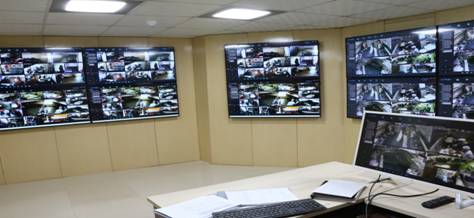
IRCTC has developed an artificial intelligence module to find anomalies in standard operating procedures using CCTV footage. With this module base, Kitchens will be monitored across India. The Artificial Intelligence module realizes the value of their videos and photos with vision computing. It can detect an unexpected change or an event that does not conform to the expected pattern using machine-learning algorithms.

To begin with, 16 base kitchens of IRCTC have been installed with high-definition cameras connected to huge monitors for AI vision detection. Live streaming of 16 base kitchens is played all the time. The system detects anomalies in headgear, uniforms, rodents, and mopping across kitchens and raises issues to be dealt with accordingly by IRCTC.

The AI system will be used to improve catering units. The system can track any anomaly in the entire nation. S operation: If a chef or any kitchen supervisor is not wearing their uniform, including the mandatory cap, the AI system will track that and automatically raise a report to the concerned contractor immediately. If the matter is not addressed within a specific time, it will be reported to the IRCTC authorities.

Once an issue has been captured through Artificial intelligence, the system will automatically create a ticket. For necessary action, an alert will be sent to all concerned via email and through the portal. The escalation matrix will be followed as per the predefined procedure. Base kitchen performance can be viewed over a while through reports on the online platform.

The module has been developed in association with a New Delhi-based company called WOBOT.

Source: Press Release
Release ID: 1531663
Date: May 08, 2018
PIB Delhi

Protect The Domain Registration Privacy Of Potential Online Abuse Targets


Congresswoman Katherine Clark urges the global domain name database maintenance organization, the Internet Corporation for Assigned Names and Numbers (ICANN), to protect the domain registration privacy of potential online abuse targets.

In a letter to ICANN, Clark points out that private information made publicly available through online registry databases has led to extreme cases of abuse, harassment, and stalking. ICANN’s publicly available Whois registry database is sometimes used by abusers to orchestrate an online intimidation tactic known as “doxing,” or the exploitative release of private information such as personal addresses and phone and social security numbers. Recent cases involving women journalists, feminists, and technology professionals highlighted the increasing prevalence of doxing. The incidents range from online abusers’ attempts to send SWAT teams to break into women’s private residences to women fleeing their homes after receiving specific violent threats, including their home addresses or photos.

Clark said: “The sad reality is, when women choose to express a strong point of view online, they become routine targets of severe online threats, and those threats often have real-world consequences. Protecting their privacy online is one way we can protect their freedom of expression. The internet plays an undeniable role in our advancement as a country and as individuals, and we all have a role in ensuring that every voice can participate equally.”

Studies have shown that women are the targets of the most severe types of internet abuse, and it happens at a rate 27 times greater than men.

In Clark’s letter, she emphasizes the crucial role privacy protections have in combating severe online threats: “Women targeted by online abuse repeatedly subjected to explicit threats of rape and murder. Their personal information often disclosed, and many have been forced to flee their homes and cancel public events because of threats received online. These violent online threats are not only emotionally devastating; they curtail women’s professional choices and limit their full participation in the economy.'”

Clark’s letter was sent in response to proposed changes to privacy policies currently under consideration by ICANN. Under the proposed revisions, organizations and individuals like domestic violence shelters, human rights activists, and others may be forced to disclose the registrants’ personal information if their website accepts donations or uses advertisements to promote their cause.

Clark’s plea to ICANN is a continuation of her efforts to end online violence that disproportionately targets women. The U.S. House recently backed Congresswoman Clark’s request to intensify investigation and prosecution of severe online threats against women. The Department of Justice was explicitly instructed to “intensify its efforts to combat this destructive abuse” and “increase investigations and prosecutions of these crimes.”

In June, Clark introduced the Prioritizing Online Threats Enforcement Act, legislation that compels the Department of Justice (DOJ) to enforce laws prohibiting online violence against women and to ensure protections for victims of severe online threats. Source: Press Release katherineclark.house.gov Date: July 6, 2015