Berkshire Grey, a Leader in AI-enabled robotics and Automation Solutions, Announces Business Combination with Revolution Acceleration Acquisition Corp


Berkshire Grey is a pure-play robotics company offering fully integrated, artificial intelligence-based software and hardware solutions to automate business operations in warehouses and logistics fulfilment centres – meeting consumer demands and exponential e-commerce growth.

 Combined Company to have an estimated post-transaction equity value of up to $2.7 billion

 Transaction expected to provide up to $413 million in cash proceeds, including a fully committed PIPE of $165 million anchored by Chamath Palihapitiya, Founder and CEO of Social Capital, Hedosophia, and funds and accounts managed by BlackRock.

 Current Berkshire Grey shareholders Khosla Ventures, New Enterprise Associates, Canaan Partners, and SoftBank Group Corp. are rolling 100% of their equity in the combined Company.

Berkshire Grey expects to have $507 million cash, which will be used to fund operations and support new and existing growth initiatives, and no debt on its balance sheet following the combination.

Bedford, MA & Washington, D.C. – February 24, 2021 – Berkshire Grey (“B.G.” or the “Company”), a developer of integrated artificial intelligence (“A.I. “) and robotic solutions for e-commerce, retail replenishment, and logistics, has entered into a definitive agreement with Revolution Acceleration Acquisition Corp (Nasdaq: RAAC) “RAA”), a particular purpose acquisition company, to create a leading publicly listed robotics and automation solutions company with a post-transaction equity value of up to $2.7 billion.

 Founded in 2013 by the current Chief Executive Officer, Tom Wagner, PhD, the Former Chief Technology Officer at iRobot, B.G. is a pure-play robotics company offering fully integrated, AI-based software and hardware solutions to automate warehouse and logistics fulfilment centres business operations. The Company’s robust solutions help retailers and logistics companies meet the exponential growth of e-commerce and ever-increasing consumer demands. B.G.’s management, engineering, and commercial teams have extensive robotics expertise and deep industry experience.

 The Company has achieved strong momentum since emerging from stealth mode in 2018, propelled by the accelerating consumer shift toward e-commerce and the resulting need for retailers to adapt their supply chain and warehouse operations to meet consumer demands for better selection, lower prices, and faster shipping. Roughly 5% of warehouses are automated today, highlighting the substantial market opportunity for solutions. B.G.’s AI-enabled robotics solutions are scalable, adaptable, and reliable – providing businesses with a holistic approach to automating tasks that speed the flow of goods to consumers. The Company’s offerings combine proprietary A.I. with differentiated hardware to create robotic picking systems and multiple types of automated mobility systems, incorporated in an orchestrated fashion to drive operational efficiencies. Differentiated hardware includes complete robots, sensing, gripping, and machine vision systems. More than 300 patent filings protect the intellectual property supporting BG.’s market-leading solutions. Operational efficiencies achieved by B.G. customers typically result in a return on their investment in as little as two to three years.

 Order backlog and ongoing negotiations with tCompany’sy’s current customers, which include multi-national retail, e-commerce, and package logistics companies, provide meaningful visibility into projected revenues for 2021 and 2022. Additionally, B.G. intends to grow its commercial organization to meet the increasing service demand, deepen its relationships in key industry sectors, and build new value-added services.

 John Delaney, the Chief Executive Officer of RAAC, will remain on the Board of Directors of the combined Company upon completion of the transaction”.

“Berkshire Grey was founded to help our customers compete even more favourably in the rapidly evolving worlds of retail and logistics” s,” said Tom Wagner, Founder and Chief Executive Officer of B.”. “Consumer expectations have changed, putting more pressure on supply chain operations to get the right goods to the right places at the right times, as efficiently as possible. Over the last 12 months, the pandemic amplified the already high pressure to transform, so today, it is no longer a question of if companies might transform but how quickly. We are incredibly excited about this transaction, which will enable Berkshire Grey to accelerate growth and provide new and existing customers with our leading robotics solutions” s,” Wagner concluded. “Today’s consumers expect a better selection of goods, at lower prices, with immediate” e shipping” e,” said John Delaney, the Chief Executive Officer of RAA”. “In our judgment, BerkshiGrey’s best-in-class technology and uniquely integrated solutions provide a critical pathway for companies to adapt to these changing needs. TCompany’s strong relationships with an installed base of blue-chip clients are a testament to its ability to deliver tangible and measurable results that empower companies to compete even more effectively. Steve Case and I are honoured to partner with Tom and the rest of BerkshiGrey’s talented team and investors to realize this singular opportunity to revolutionize how businesses operate.

I look forward to joining their Board of Directors” s,” added Delaney.

Transaction Overview

The transaction is expected to provide up to $413 million in cash proceeds, including a fully committed PIPE of $165 million, with current B.G. shareholders Khosla Ventures, New Enterprise Associates, Canaan Partners, and SoftBank Group Corp. rolling 100% of their equity into the combined Company. The PIPE is anchored by Chamath Palihapitiya, founder and CEO of Social Capital, Hedosophia, and funds and accounts are managed by BlackRock.

 At closing, B.G. expects to have approximately $507 million cash, which will be used to fund operations and support new and existing growth initiatives, and no debt on its balance sheet. All references to available money from the trust account and retained transaction proceeds are subject to any redemptions by the public shareholders of RAAC and payment of transaction expenses.

 The transaction, which has been unanimously approved by RAAC’sC’s Board of Directors aB.G.’s. ‘s Board of Directors, is expected to close during the second quarter of 2021 and is subject to approval RAAC’sC’s stockholders and other customary closing conditions.

 Advisors

Credit Suisse Securities (USA) LLC served as an exclusive financial advisor and capital markets advisor to B.G. and acted as the sole placement agent on the PIPE. J.P. Morgan Securities LLC is serving as the exclusive financial advisor to RAAC. Skadden, Arps, Slate, Meagher & Flom LLP acted as legal advisor to RAAC. Goodwin Procter LLP acted as B.G.’s. G.’s ladvisorisor. Paul, Weiss, Rifkind, Wharton & Garrison LLP serves as legal advisor to Credit Suisse Securities (USA) LLC.

 Additional information about the proposed transaction, including a copy of the merger agreement and investor presentation, will be provided in a Current Report on Form 8-K containing an investor presentation to be filed by RAAC with the Securities and Exchange Commission and available at http://www.sec.gov.  

Investor Webcast

The investor webcast will be archived and available for replay at https://revolutionaac.com/ at 8:00 AM ET.

Cautionary Statement Regarding Forward-Looking Statements

 This communication contains certain forward-looking statements within the meaning of the federal securities laws concerning the proposed transactions between B.G. and RAAC. Forward-looking statements may be identified by the use of words such as “s “, estim “t”,” “p” a “,” “proj” c”,” “force” s”,” “int” n”,” “exp” c”,” “anticipate” t”,” “beli” v”,” “s” e”,” “start” g”,” “fut” r”,” “opportunity” t”,” “a”,” “tar” e”,” “sho” l”,” “w” l”,” “wo “l”,” “will “b”,” “will conti “u”,” “will likely res” lt,” or similar expressions that predict or indicate future events or trends or that are not statements of historical matters. These forward-looking statements include, but are not limited to, statements regarding the proposed transaction between B.G. and RAAC, including statements about the proposed transaction’s expected timing, completion, and effects. These statements are based on various assumptions, whether or not identified in this document, and on the current expectations of RRAAC and management. They are not predictions of actual performance and, as a result, are subject to risks and uncertainties. These forward-looking statements are provided for illustrative purposes only. They are not intended to serve and must not be relied on by any investor as a guarantee, an assurance, a prediction, or a definitive statement of fact or probability. Actual events and circumstances are difficult or impossible to predict and will differ from assumptions. Many actual events and circumstances are beyond the control of RAAC and B.G. These forward-looking statements are subject to several risks and uncertainties, including, but not limited to,

  1. the risk that the proposed transaction may not be completed promptly or at all, which may adversely affect the price ofRAAC’ss securities,
  2. the risk that the proposed transaction may not be achieved byRAAC’ss business combination deadline and the potential failure to obtain an extension of the business combination deadline if sought by RAAC,
  3. the inability to satisfy the conditions to the consummation of the proposed transaction, including the adoption of the merger agreement by the stockholders of RAAC, the satisfaction of the minimum trust account amount following redemptions byRAAC’ss public stockholders, and the receipt of certain governmental and regulatory approvals,
  4. the inability to complete the PIPE investment in connection with the proposed transaction,
  5. the lack of a third-party valuation in determining whether or not to pursue the proposed transactions,
  6. the occurrence of any event, change, or other circumstance that could give rise to the termination of the merger agreement,
  7. the amount of redemption requests made byRAAC’ss public stockholders,
  8. the effect of the announcement or pendency of the proposed transaction on onB.G.’ss business relationships, operating results, and business generally,
  9. Risks that the proposed transaction disrupts the current plans and operations of B.G. and potential difficulties in B.G. customer and employee retention as a result of the proposed transaction,
  10. risks relating to the uncertainty of the projected financial information concerning B.G.,
  11. risks relating to increasing expenses of B.G. in the future andB.G.’ss ability to generate revenues from a limited number of customers,
  12. risks associated with B.G. developing the majority of its revenues from a limited number of products and customers,
  13. the passing of new laws and regulations governing the robotics and artificial intelligence industries that potentially resB.G.’sB.G.’s business or increase its costs,
  14. Potential litigation relating to the proposed transaction that could be instituted against B.G., RAAC, or their respective directors and officers, including the effects of any outcomes related to it,
  15. the ability to maintain the listiRAAC’sRAAC’s securities on The Nasdaq Stock Market LLC, either before or after the consummation of the business combination,
  16. priRAAC’sRAAC’s securities may be volatile due to a variety of factors, including changes in the competitive and highly regulated industries in which RAAC plans to operate, variations in operating performance across competitors, changes in laws and regulations affecting’s business, and changes in the combined capital structure,
  17. the ability to implement business plans, forecasts, and other expectations after the completion of the proposed transaction and identify and realize additional opportunities,
  18. unexpected costs, charges, or expenses resulting from the proposed transaction,
  19. risks of downturns and a changing regulatory landscape, and
  20. the effects of natural disasters, terrorist attacks, and the spread and reduction of infectious diseases, such as COVID-19, on the proposed transactions or on the ability to implement business plans, forecasts, and other expectations after the proposed transactions are completed.

The preceding list of factors is not exhaustive. You should carefully consider the primary factors and the other risks and uncertainties described in” the “Risk F “ctors” sectiRAAC’sRAAC’s registration statement on Form S-1 (File No. 333-250850)” (the “Fo” m S-1″), the registration statement on Form S-4 discussed below (when it becomes available) and other documents filed by RAAC from time to time with the U.S. Securities and Exchange Commission” (th” “SEC”). These filings identify and address other significant risks and uncertainties that could cause actual events and results to differ materially from those in the forward-looking statements. If any of these risks materialize or our assumptions prove incorrect, actual events and results could differ materially from those in the forward-looking statements. There may be additional risks that neither RAAC nor B.G. presently knows or that RAAC and B.G. currently believe are immaterial that could also cause actual events and results to differ from those contained in the forward-looking statements. Also, forward-looking statements reRAAC’sRAAC’B.G.’sB.G.’s expectations, plans, or forecasts of future events and views as of the date of this document. RAAC and B.G. anticipate that subsequent events and developments will cause RAAC’s assessments to change. While RAAC and B.G. may elect to update these forward-looking statements at some point in the future, RAAC and B.G. expressly disclaim any obligation to do so unless required by applicable law. These forward-looking statements should not be relied upon as representative of RAAC’s RAAC’B.G.’s B.G.’s assessments as of any date after this document. Accordingly, undue reliance should not be placed upon the forward-looking statements. Neither RAAC nor B.G. guarantees that either RAAC, B.G., or the combined Company will achieve the results or other matters outlined in the forward-looking statements.

Additional Information and Where to Find It

This communication relates to the proposed business combination between RAAC and B.G.” (the “Business Combi “ation”). RAAC intends to file a registration statement on Form S-4 with the SEC, which will include a preliminary proxy statement to be distributed to holdeRAAC’sRAAC’s common stock in connectionRAAC’sRAAC’s solicitation of proxies for the voRAAC’sRAAC’s stockholders concerning the Business Combination. After the registration statement has been filed and declared effective, RAAC will mail a definitive proxy statement/prospectus to its stockholders as of the record date established for voting on the Business Combination and the other proposals regarding the Business Combination outlined in the registration statement. RAAC may also file other documents with the SEC regarding the proposed transaction. BEFORE MAKING ANY VOTING OR INVESTMENT DECISION, INVESTORS AND SECURITY HOLDERS ARE URGED TO CAREFULLY READ THE ENTIRE REGISTRATION STATEMENT AND PROXY STATEMENT / PROSPECTUS WHEN THEY BECOME AVAILABLE AND ANY OTHER RELEVANT DOCUMENTS FILED WITH THE SEC AND THE DEFINITIVE VERSIONS THEREOF (WHEN THEY BECOME AVAILABLE), AS WELL AS ANY AMENDMENTS OR SUPPLEMENTS TO THESE DOCUMENTS, CAREFULLY AND IN THEIR ENTIRETY BECAUSE THEY WILL CONTAIN IMPORTANT INFORMATION ABOUT THE PROPOSED TRANSACTION. When available, the documents filed by RAAC with the SEC, including the preliminary proxy statement/prospectus, may be obtained free of charge onthe SEC’s website at http://www.sec.gov. In addition, the documents filed by RAAC may be obtained free of charge upon written request to RAAC at 1717 Rhode Island Ave N.W., Suite 1000, Washington, DC 20036, Attn: Investor Relations.

Participants in the Solicitation

RAAC and B.G. and their respective directors and executive officers may be deemed to be participants in the solicitation of proxies from stockholders of RAAC in connection with the proposed transaction under the rules of theRAAC’sRAAC’s stockholders and other interested persons may obtain, without charge, more detailed information regarding the names, affiliations, and interests of directors and executive officers of RARAAC’sRAAC’s Form S-1 and its other filings with the SEC. Additional information regarding persons who may, under the rules of the SEC, be deemed the participants in the proxy solicitatiRAAC’sRAAC’s stockholders in connection with the proposed Business Combination and a description of their direct and indirect interests, by security holdings or otherwise, will be included in the preliminary proxy statement/prospectus and will be contained in other relevant materials to be filed with the SEC regarding the proposed Business Combination (if and when they become available). You may obtain free copies of these documents onthe SEC’s website at http://www.sec.gov. Copies of documents filed with the SEC by RAAC using the contact information above will also be available free of charge from RAAC.

No Offer or Solicitation

This communication is not a proxy statement or solicitation or a proxy, consent or authorization concerning any securities or in respect of the proposed Business Combination. It shall not constitute an offer to sell or a solicitation of an offer to buy the securities of RAAC, B.G. or the combined Company, nor shall there be any sale of securities in any jurisdiction in which such offer, solicitation or sale would be unlawful before registration or qualification under the securities laws of any such jurisdiction. No offer of securities shall be deemed to be made except using a prospectus meeting the requirements of Section 10 of the Securities Act and otherwise by applicable law.

4

About Berkshire Grey

Berkshire Grey helps customers radically change the essential way they do business by delivering game-changing technology that combines A.I. and robotics to automate fulfilment, supply chain, and logistics operations. Berkshire Grey solutions are a fundamental engine of change that transforms pick, pack, move, store, organize and sort operations to deliver a competitive advantage for enterprises with today’s connected consumers. Berkshire Grey customers include Global 100 retailers and logistics service providers. 

About Revolution Acceleration Acquisition Corp

 Revolution Acceleration Acquisition Corp focuses on value-creation opportunities at the forefront of rapid technological innovation and economic growth. We believe that alternatives to the traditional IPO process create an essential avenue for transformative, category-defining companies to quickly and efficiently access public markets. This enables them to scale their business and create value for a broad and diverse group of investors. 

Source: Press Release

Date: February 24, 2021

CONTACTS

 Tracy Zuckerman Van Grack
Revolution
Tracy.VanGrack@revolution.com
Sara Evans / Kerry Golds
Finsbury Glover Hering
RAAC-US@finsbury.com

Air Quality Commission ropes in top technical institutions to set up a Decision Support System


The System will use Artificial Intelligence(AI) to help improve the air quality over targeted sectors of Delhi /NCR.

The Commission for Air Quality Management (CAQM) in NCR and adjoining areas have begun setting up a decision support system (DSS) with web, GIS, and multi-model-based procedural and planning decision support tools. 

This tool will help immensely in capturing the static and dynamic features of the emissions from various sources. Using a chemical transport model, it will have an integrated framework to handle both primary and secondary pollutants. The System will also be able to take the source-specific interventions with the framework to estimate the benefits of interventions. It will focus on presenting the best results in a comprehensive, user-friendly, and straightforward format for different users.

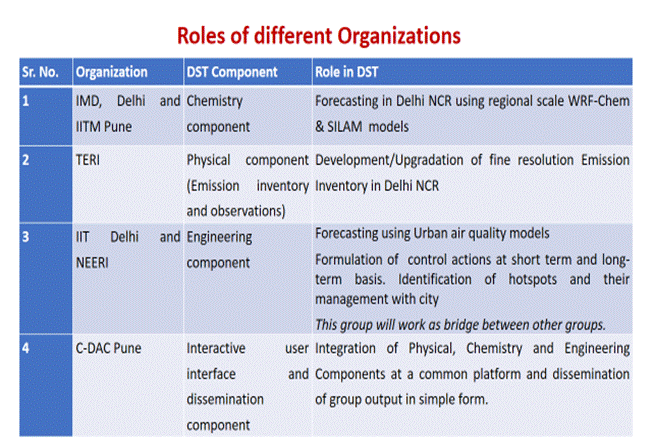
The Commission has entrusted the task to expert groups from reputed knowledge institutions of the country given below for framework development of Air Quality Management DSS for Delhi:-

 The Air Quality Management Decision Support Tool (DST) integrates an emissions inventory development application and database; regional, local, and source–receptor modelling; and Geographical Information System (GIS) based visualization tools in a software framework to build a robust system to formulate and implement source-specific interventions to improve the air quality over targeted sectors of Delhi / NCR. Identification of source-specific interventions by the DST is deliberated with the involvement of stakeholders.

The covered sources will include industries, transport, power plants, residential, DG sets, road dust, agricultural burning, refuse burning, construction dust, ammonia, volatile organic compounds, and landfills. For instance, municipalities, industrial associations, industrial development authorities, etc., would be the stakeholders in identifying interventions related to waste burning and industrial source pollution.

Upon identification of feasible interventions, the artificial intelligence-based expert system has a hierarchical database of simulated scenarios, potentially assessing the impact of the identified possible intervention, which would be implemented by regulatory organizations such as CPCB and state PCBs. The on-field implementation is monitored independently by credible citizen watch groups and professional NGOs. Finally, air quality data collected near the area where the intervention is implemented will be analyzed to understand the real-world benefits of such intervention. Source: Press Release Release ID: 1691200 Date: January 22, 2021 PIB Delhi Ministry of Environment, Forest and Climate Change

73rd Army Day celebrated


Image Courtesy: pib.gov.in

Indian Army celebrated its 73rd Army Day today. Every year, the Indian Army celebrates January 15 as ‘Army Day’ to commemorate the day when General (later Field Marshal) K M Carriappa took over the command of the Army from General Sir FRR Bucher, the last British Commander-in-Chief in 1949 and became the first Commander-in-Chief of Indian Army post Independence.

The celebrations commenced with a wreath-laying ceremony at the National War Memorial, where CDS Gen Bipin Rawat and the three Service Chiefs paid homage to the Martyrs.

General MM Naravane, Chief of the Army Staff, reviewed the Army Day Parade at the Cariappa Parade Ground, Delhi Cantonment and was awarded 15 Sena Medals (including five posthumously) for individual acts of Gallantry and 23 COAS Unit Citations for commendable performance of their respective units. The Army Day parade was commanded by Maj Gen Alok Kaker, Chief of Staff, Delhi Area. The leading contingent of the train was formed of the recipients of the Param Vir Chakra and Ashok Chakra awardees. This was followed by army contingents, which included T-90 tank BHISHMA, infantry combat vehicle BMP II, BRAHMOS missile system, PINAKA Multiple Launch Rocket System, upgraded SCHILKA Gun System, Bridge Layer Tank, international sports awardees, and seven marching contingents including mounted horse cavalry.

The Indian Army also conducted a live demonstration of Drone Swarming capability using 75 indigenously designed and developed drones that executed an array of Artificial Intelligence (AI) enabled simulated offensive missions and close support tasks.

Source: Press Release
Release ID: 1688778
Date: January 15, 2021
PIB Delhi
Ministry of Defence

Attorney General James Issues Warning About Scam Targeting Grandparents During Pandemic


  • “Grandparent Scam” Targets Seniors with Phone Calls from Fraudsters Posing as Grandchild Asking for Money
  • With Seniors More Isolated Than Ever Due to COVID-19 Restrictions,
  • AG James Offers New Yorkers Tips to Protect Themselves

NEW YORK – New York Attorney General Letitia James today issued an alert to New Yorkers, warning them about the “Grandparent Scam,” a common phone scam that targets senior citizens with calls from fraudsters posing as a grandchild of the victim and asking for money. Attorney General James also shared a public service announcement in which high school students explain how the scam works and tips on avoiding becoming a victim to grandparents. The report features television personality Dr. Ruth Westheimer, who shares her experience about almost falling victim to the scam.

“Due to COVID-19 restrictions, many grandparents have not seen their grandchildren for months and maybe especially susceptible to this common and despicable scam,” said Attorney General James. “I urge all New Yorkers to be on the alert for this type of fraud and to protect themselves and their family members by following these tips. We should all be speaking with elderly family members and warning them that scammers are ready to prey on their love of family in an effort to take their money.”

The scam typically works as follows: A senior receives an unexpected call from someone who claims to be their grandchild. The caller then falsely claims an emergency and asks the grandparent to send money immediately. For example, the caller might say, “Grandma, I got arrested for drunk driving. I need bail money fast.” Or the caller may claim to have been mugged or that their car has broken down. The caller will often explicitly tell the grandparent not to call the grandchild’s parents because they will be mad or worry too much. The caller may also pose as an attorney, a bail bondsperson, or a law enforcement official contacting the grandparent on behalf of a grandchild.

The scammers often call in the middle of the night or early in the morning to take advantage of the fact that the victim may not be alert enough to ask more questions. Victims are often instructed to mail cash payments or go out and buy prepaid debit or gift cards and call back and read the serial number on the cards, allowing the scammer to transfer the funds immediately. Victims often lose thousands of dollars, and the money is rarely recovered, as the scammers can call from anywhere in the world. The scam is severely underreported, as many victims are often embarrassed and do not want to tell anyone they fell for it.

Attorney General James offers the following tips to protect against the Grandparent Scam:

  • Take a pause. Scammers create a sense of urgency to prey on victims’ emotions and their love for family members.
  • Verify any supposed emergency by calling friends and family before sending money. It is essential if a potential victim has been warned not to do so.
  • A grandparent may think they would know whether they were speaking to their grandchild or an imposter, but it is easy to be fooled. The caller may be crying, the background may be noisy, or the caller may claim the connection is terrible.
  • If the caller purports to be a bail bonds person, ask where the relative is being held and directly contact the facility. Grandparents can also call their local police department, where officers can reach the jail and confirm the story.
  • Be suspicious of anyone who calls unexpectedly asking to be sent money.
  • Never send cash through the mail.
  • Never purchase prepaid debit cards or gift cards to transfer money.
  • Develop a secret code or “password” with family members that can be used to verify family members’ identities over the phone.
  • Ask a question to which only the real grandchild would know the answer, such as “What was the name of your first pet?”
  • Set Facebook and other social media settings to private to limit the information available to scammers, such as grandchildren’s names.

In 2020, the Federal Trade Commission received 24,545 complaints of individuals impersonating family members and friends, up from 20,234 in 2019. New Yorkers alone filed 1,359 complaints in 2020.

Source: Press Release
Date: January 6, 2021
Attorney General's Press Office/212-416-8060 
nyag.pressoffice@ag.ny.gov

Attorney General James Helps Secure $2.4 Million from Sabre After Data Breach


NEW YORK – New York Attorney General Letitia James announced a $2.4 million multistate agreement with Sabre Corporation that resolves an investigation into the 2017 data breach of Sabre Hospitality Solutions’ hotel booking system. The breach exposed the data of approximately 1.3 million credit cards. In addition to the $2.4 million payment — $111,783.19 of which will go to the state of New York — Sabre will be required to make numerous changes to its security and notification protocols.

“Companies need to do a better job of notifying New Yorkers when their personal information has been breached,” said Attorney General James. “Sabre first failed its customers with a susceptible security system, then failed them when it came to providing proper notifications. Today’s agreement not only imposes a hefty fine on Sabre but will ensure that the company has the appropriate security and incident response plan in place so that its failure does not take place again.”

Sabre Hospitality Solutions, a business segment of Sabre, operates the SynXis Central Reservation System, facilitating hotel reservation booking. SynXis connects business travel coordinators, travel agencies, and online travel booking companies on one end to Sabre’s hotel customers on the other. On June 6, 2017, Sabre informed its hotel clients of a data breach between August 2016 and March 2017, which the business had disclosed in a 10-Q filing with the U.S. Securities and Exchange Commission (SEC) the month before. The hotel clients notified the affected consumers, resulting in some statements being issued as late as 2018 and some consumers receiving multiple notifications stemming from the same breach.

Today’s agreement requires Sabre to include language in future contracts that specifies the roles and responsibilities of both parties in the event of a breach. It also requires Sabre to determine whether its clients have notified consumers and to provide the attorney general with a list of all the customers it has announced. Finally, the agreement requires Sabre to implement and maintain a comprehensive information security program, implement a written incident response and data breach notification plan, implement specific security requirements, and undergo a third-party security assessment.

Joining Attorney General James in announcing today’s agreement are the attorneys general of Alaska, Arizona, Arkansas, Connecticut, Florida, Hawaii, Illinois, Indiana, Iowa, Louisiana, Michigan, Minnesota, Missouri, Montana, Nebraska, Nevada, New Jersey, North Carolina, North Dakota, Ohio, Oregon, Pennsylvania, Tennessee, Vermont, Virginia, and Washington.

This matter was handled by Deputy Bureau Chief Clark Russell of the Bureau of Internet and Technology under the supervision of Bureau Chief Kim Berger. The Bureau of Internet and Technology is a part of the Division for Economic Justice, led by Chief Deputy Attorney General Chris D’Angelo and overseen by First Deputy Attorney General Jennifer Levy.

Source: Press Release
Date: December 23, 2020
Attorney General’s Press Office/212-416-8060 
nyag.pressoffice@ag.ny.gov

Attorney General James Leads Multistate Lawsuit Seeking to End Facebook’s Illegal Monopoly


  • AG James Leads Bipartisan Coalition of 48 Attorneys General Charging Anticompetitive Conduct
  • Facebook Thwarted Competition, Reduced Consumer Privacy for Profits

NEW YORK – New York Attorney General Letitia James filed a lawsuit against Facebook Inc. today, alleging that the company has and continues to stifle competition to protect its monopoly power illegally. The lawsuit alleges that, over the last decade, the social networking giant illegally acquired competitors in a predatory manner and cut services to more minor threats — depriving users of the benefits of competition and reducing privacy protections and services along the way — all to boost its bottom line through increased advertising revenue. Attorney General James leads a bipartisan coalition of 48 nationwide attorneys in filing today’s lawsuit to stop Facebook’s anticompetitive conduct.

“For nearly a decade, Facebook has used its dominance and monopoly power to crush smaller rivals and snuff out competition, all at the expense of everyday users,” said Attorney General James. “Today, we are taking action to stand up for the millions of consumers and many small businesses that have been harmed by Facebook’s illegal behaviour. Instead of competing on the merits, Facebook used its power to suppress competition so it could take advantage of users and make billions by converting personal data into a cash cow. Almost every state in this nation has joined this bipartisan lawsuit because Facebook’s efforts to dominate the market were as illegal as they were harmful. Today’s suit should send a clear message to Facebook and every other company that any efforts to stifle competition, reduce innovation, or cut privacy protections will be met with the full force of our offices.”

Since 2004, Facebook has operated as a personal social networking service that facilitates sharing content online without charging users a monetary fee but, instead, provides these services in exchange for a user’s time, attention, and personal data. Facebook then monetizes its business by selling advertising to firms that attach immense value to user engagement and highly targeted advertising that Facebook can deliver due to the vast trove of data it collects on users, their friends, and their interests.

To maintain its market dominance in social networking, Facebook employs various methods to impede competing services and — as Chairman, Chief Executive Officer, and controlling shareholder Mark Zuckerberg has stated — to “build a competitive moat” around the company. The two most utilized strategies have been to acquire smaller rivals and potential rivals before they could threaten Facebook’s dominance and suffocate and squash third-party developers that Facebook invited to use its platform — allowing Facebook to maintain its monopoly over the social networking market and make billions from advertising. As one market participant noted, if an application (app) encroached on Facebook’s turf or didn’t consider selling, Zuckerberg would go into “destroy mode,” subjecting small businesses to the “wrath of Mark.”

Consumers Suffer – Reduced Privacy and Fewer Options

Facebook’s unlawful monopoly gives it broad discretion to set the terms for how its users’ private information is collected and used to further its business interests. When Facebook cuts off integration to third-party developers, users cannot quickly move their information to other social networking services, such as their friends’ lists. This decision forces users to stay put or start their online lives from scratch if they want to try an alternative.

Because Facebook users have nowhere else to go, the company can now decide how to curate content on the platform and use the personal information it collects to further its business interests, even if those choices conflict with the goods and preferences of Facebook users.

Additionally, while consumers initially turned to Facebook and other apps now owned by the company seeking privacy protection and control over their data — Facebook’s “secret sauce” — many of those protections are now gone.

Who Would Turn Down a “High Enough Price”?

The harm to consumers over the last decade comes directly from Facebook’s acquisition of smaller firms that pose competitive threats. Facebook employs unique data-gathering tools to monitor new apps to see what is gaining traction with users. That data helps Facebook select acquisition targets that pose the greatest threats to Facebook’s dominance. Once selected, Zuckerberg and Facebook offer the heads of these companies vast amounts of money — that significantly inflates the values of the apps — all in hopes of avoiding any competition for Facebook in the future.

When it came to startups, Zuckerberg has observed that if these companies were not inclined to sell, “they’d have to consider it” if Facebook offered a “high enough price.”

The elimination of competitive alternatives means users have no option to Facebook, fueling its unfettered growth without competition and further entrenching its position. Instagram and WhatsApp were the two most prominent examples of this successful strategy, which posed a unique and dire threat to Facebook’s monopoly.

#TotalDomination – Purchase of Instagram

Facebook and Zuckerberg quickly saw Instagram as a direct threat after the company launched. After initially trying to build its version of Instagram that gained no traction, Zuckerberg admitted in early 2012 that Facebook was “very behind” Instagram and that a better strategy would be “to consider paying a lot of money” for the photo-sharing app to “neutralize a potential competitor.”

A few months later, in April 2012, Facebook acquired Instagram for $1 billion, despite not having a single cent of revenue and valuing itself at only $500 million. Zuckerberg offered Instagram’s owners double the valuation that Instagram came up with, even though Zuckerberg previously described the initial $500 million value as “crazy.”

$100 Million Isn’t Cool. You Know What’s Cool?…$19 Billion – Purchase of WhatsApp

The mobile messaging app WhatsApp also posed a unique threat to Facebook’s growth, allowing users to send messages on their mobile devices one-to-one and to groups. While Facebook focused on several emerging mobile messaging services, WhatsApp was viewed as the “category leader”, with over 400 million active users worldwide in 2014, and the one that could potentially pose the most significant threat.

Facebook feared WhatsApp eroding its monopoly power, stating WhatsApp or similar products posed “the biggest competitive threat we face as a business.” Facebook was also concerned that WhatsApp could ultimately be bought by a competing behemoth that had previously shown interest in social networking — Google.

In February 2014, Facebook acquired WhatsApp for nearly $19 billion — wildly more than the extravagant price Zuckerberg had recommended paying a few months earlier and the $100 million another competitor offered to buy the company two years earlier.

Here Today, Gone Tomorrow – Cutting Competitors Off from Facebook Overnight

As laid out in today’s complaint, Facebook targets competitors with a ‘buy or bury’ approach: if they refuse to be bought out, Facebook tries to squeeze every bit of oxygen out of the room for these companies. To facilitate this goal, Facebook has used an “open first–closed later” strategy to stop or deter competitive threats from competing at the inception.

Facebook opened its platform to apps created by third-party developers to increase functionality on the site and, subsequently, increase the number of users on Facebook. Facebook also drove traffic to third-party sites by making it easier for users to sign in so that Facebook could capture valuable data about its users’ off-Facebook activity and enhance its ability to target advertising.

Not only did Facebook benefit monetarily through the third-party developers’ revenue, but Facebook’s services were expanded, as Facebook could not create and develop all the useful social features offered through third-party developers.

After years of promoting open access to its platform, in 2011, Facebook began to rescind and block access to the site to apps that Facebook viewed as actual or potential competitive threats. Facebook understands that an abrupt termination of established access to the site can be devastating to an app — especially one still relatively new to the market. An app that suddenly loses access to Facebook is hurt not only because its users can no longer bring their friend lists to the new app but also because a sudden loss of functionality — which creates broken or buggy features — suggests to users that an app is unstable. In the past, some of these companies experienced almost overnight drop-off in user engagement and downloads, and their growth stalled.

Facebook’s response to competitors also warns other apps that if they encroach on Facebook’s territory, Facebook will end their access to crucial integrations. Additionally, Facebook’s actions deter venture capitalists from investing in companies that Facebook might see as competitors in the future.

Ads Aren’t Cool…But They Are Profitable

Due to Facebook’s expansive user base and the vast trove of data it collects from its users and users’ connections, Facebook can sell highly targeted advertising that firms greatly value.

The volume, velocity, and variety of Facebook’s user data give it an unprecedented, virtually 360-degree view of users and their contacts, interests, preferences, and activities. The more users Facebook can acquire and convince to spend additional time on its platforms, the more data Facebook can accumulate by surveilling the activities of its users and thereby increasing its revenues through advertising — reaping the company billions every month.

Specific Violations

Facebook is specifically charged with violating Section 2 of the Sherman Act and multiple violations of Section 7 of the Clayton Act.

Remedies

Attorney General James and the coalition asked the court to halt Facebook’s illegal, anticompetitive conduct and block the company from continuing this behaviour. Additionally, the team asks the court to restrain Facebook from making further acquisitions valued at or more than $10 million without advance notice to the state of New York and other plaintiff states. Finally, the court is asked to provide any additional relief it determines is appropriate, including the divestiture or restructuring of illegally acquired companies or current Facebook assets or business lines.

The complaint was filed in the U.S. District Court for the District of Columbia.

Separately, but in coordination with the coalition led by Attorney General James, the Federal Trade Commission (FTC) filed a complaint against Facebook in the U.S. District Court for the District of Columbia today. Attorney General James wishes to thank the FTC for its close working relationship and collaboration during this investigation.

Attorney General James leads this lawsuit with an executive committee comprised of the attorneys general of California, Colorado, Florida, Iowa, Nebraska, North Carolina, Ohio, Tennessee, and the District of Columbia. The executive committee is joined by the attorneys general of Alaska, Arizona, Arkansas, Connecticut, Delaware, Hawaii, Idaho, Illinois, Indiana, Kansas, Kentucky, Louisiana, Maine, Maryland, Massachusetts, Michigan, Minnesota, Mississippi, Missouri, Montana, Nevada, New Hampshire, New Jersey, New Mexico, North Dakota, Oklahoma, Oregon, Pennsylvania, Rhode Island, Texas, Utah, Vermont, Virginia, Washington, West Virginia, Wisconsin, Wyoming, and the territory of Guam.

The Facebook investigation is being handled by Assistant Attorneys General Johanna Skrzypczyk, Hanna Baek, and Nathaniel Kosslyn, Legal Assistant Shirly Huang, and Internet and Technology Analyst Joe Graham — all of the Bureau of Internet and Technology, under the supervision of Bureau Chief Kim Berger; Assistant Attorneys General Zach Biesanz, Beatriz Marques, James Yoon, and Amber Wessels-Yen, and Legal Assistant Arlene Leventhal — all of the Antitrust Bureau, under the supervision of Bureau Chief Elinor Hoffmann; Chief Economist Paola Valenti; and Project Attorney Benjamin Cole. The Bureau of Internet and Technology and the Antitrust Bureau are part of the Division for Economic Justice, which Chief Deputy Attorney General Chris D’Angelo and First Deputy Attorney General Jennifer Levy oversee.

Source: Press Release
December 9, 2020
Attorney General’s Press Office/212-416-8060 
nyag.pressoffice@ag.ny.gov

Wolf Administration to Use Wireless Emergency Alert System for COVID-19 Messaging


Harrisburg, PA – Today, the Wolf Administration will use the national Wireless Emergency Alert (WEA) system to provide critical public messages about the COVID-19 pandemic.

WEA is a national public safety system that allows customers with compatible mobile devices to receive geographically targeted, text-like messages alerting them of imminent threats to safety in their area. The WEA system is commonly used to issue time-sensitive and life-saving alerts, such as Amber Alerts or severe weather warnings.

The Federal Communication Commission’s Public Safety and Homeland Security Bureau allows the state, as an authorized alert originator of messages, to use the WEA system as a COVID-19 communications tool.

Pennsylvania’s first message will be sent statewide today, with the option to target specific state regions for future announcements. For example, suppose one part of the state is experiencing an exceptionally high surge in COVID-19 cases. In that case, cellphone users in that region may receive an alert with information about staying at home or where to find an available COVID-19 testing site in their area.

Governor Tom Wolf said:  “WEA is one more way to reach as many Pennsylvanians as we can to provide timely information on COVID-19. This tool is another tool in our toolkit to fight the pandemic and unite against COVID.”

Message content, in both English and Spanish, is a combined effort of the Department of Health and the Pennsylvania Emergency Management Agency. PEMA will send alerts through FEMA’s Integrated Public Alert and Warning System (IPAWS) to participating wireless carriers, pushing the signs to compatible mobile devices in the area. Wireless companies volunteer to participate in WEA.

According to the Federal Communications Commission, since its launch in 2012, the WEA system has been used nearly 56,000 times to warn the public about dangerous weather, missing children, and other critical situations – all through alerts on compatible cell phones and other mobile devices.

Source: Press Release
Date: November 25, 2020
pa.gov

ARTPARK to usher in a new model of industry, academia, and government collaboration in AI and robotics for societal impact


An AI & Robotics Technologies Park (ARTPARK) set up in Bengaluru will promote technology innovations in AI (Artificial Intelligence)& Robotics, leading to societal impact by executing ambitious mission mode R&D projects in healthcare, education, mobility, infrastructure, agriculture, retail, and cyber-security focusing on problems unique to India.

ARTPARK is a unique not-for-profit foundation established by the Indian Institute of Science (IISc), Bengaluru, with support from AI Foundry in a public-private model. With seed funding of Rs. 170 Cr ($22mn) from the Department of Science & Technology(DST), Govt. of India, under the National Mission on Interdisciplinary Cyber-Physical Systems (NM-ICPS), it will bring about a collaborative consortium of partners from industry, academia, and government bodies. This will lead to cutting-edge innovations in new technologies, standards, products, services, and intellectual properties.

“The National Mission ICPS with its 25 Hubs has a unique architecture that envisages a strong collaboration and co-ownership among the triple helix of industry, academia, and government with full flexibility. Generous additional support of the Government of Karnataka to the ARTPARK Hub brings extraordinary value in increasing its effectiveness, reach and use. It also sets a template of center-state partnership in the frontier areas of technology– a theme which will receive focus in the soon-to-be-released Science, Technology, and Innovation Policy 2020”, said Professor Ashutosh Sharma, DST Secretary at the launch of the ARTPARK recently.

“Indian academia has been carrying out cutting-edge technology research in various domains. However, we have had systemic issues in moving the results of this research from university laboratories into the outside world. ARTPARK would go a long way in establishing a template for addressing this need,” Prof. Govindan Rangarajan, Director of IISc, pointed out.

“These moonshots will not only enable India but also build technology solutions for the 6 bn people in the developing world,” said Umakant Soni, Co-founder & CEO,

ARTPARK will develop AI and robotics facilities to support technology innovations and capacity building through advanced skills training of students and professionals in these areas. Some of these facilities will be critical enablers for new technologies, products, and services. It will develop DataSetu, which will enable confidentiality and privacy-preserving frameworks to share data, run analytics, spur the data-sharing ecosystem, and create a data marketplace, boosting AI applications and solutions.

One such service will be BhashaSetu, which enables real-time indicator language translation, both speech-to-speech and speech-to-text. This will further unlock the country’s economic potential, enabling all Indian citizens to participate in economic progress equitably, regardless of their language.

Prof. Bharadwaj Amrutur, Research Head & Director ARTPARK, explained how ARTPARK was a natural evolution of the Robert Bosch Centre for Cyber-Physical Systems, interdisciplinary research, and academic centre at IISc, with funding from the Bosch group of companies.  

Vishal Dhupar, MD, NVIDIA South Asia, spoke about the collaborations between NVIDIA and ARTPARK to “enable technology to solve humanity’s grand challenges”. 

Robin Sukhia, Secretary-General and President of the Sweden India Business Council, pointed out how the not-for-profit organization will enable international co-creation at a higher and deeper level to help solve today’s and tomorrow’s challenges uniquely using technology.

ARTPARK, in collaboration with AI Foundry, will run a novel ARTPARK Venture Studio that will mentor technopreneurs who will take the outputs of the mission mode projects to launch new startups.

Press Information Bureau
Government of India
Ministry of Science & Technology
Date: November 29, 2020

An investigation into a massive 2014 data breach


Attorney General James Helps Secure $17.5 Million After Data Breach at The Home Depot

New York State to Receive Nearly $600,000

NEW YORK – New York Attorney General Letitia James announced a multistate agreement with The Home Depot, Inc. that resolves an investigation into a massive 2014 data breach, which compromised the payment card information of approximately 40 million consumers nationwide. Today’s agreement resolves the cyber-attack by requiring The Home Depot to pay 46 states and the District of Columbia $17.5 million — of which $597,459.80 will go to New York state. In addition to the payment, The Home Depot has agreed to a series of data security practices designed to strengthen its information security program and safeguard consumers’ personal information.

Attorney General James said: “New Yorkers have every reasonable expectation that their personal financial information will remain private and protected. Instead of building a secure system, The Home Depot failed to protect consumers and put their data at risk. My office is committed to protecting consumers, which is why we will continue to use every instrument in our toolbox to hold accountable companies that fail to safeguard personal information.”

The breach occurred when hackers accessed The Home Depot’s network and deployed malware on the company’s self-checkout point-of-sale system. The malware allowed hackers to obtain the payment card information of customers who used self-checkout lanes at The Home Depot stores throughout the U.S. between April 10, 2014, and September 13, 2014.

As part of the agreement, The Home Depot will also make a series of provisions to its security protocols, including:

  • Employing a duly qualified chief information security officer — reporting to both senior or C-level executives and the board of directors regarding The Home Depot’s security posture and security risks;
  • Providing resources necessary to implement the company’s information security program fully;
  • Providing appropriate security awareness and privacy training to all personnel who have access to the company’s network or responsibility for U.S. consumers’ personal information;
  • Employing specific security safeguards concerning logging and monitoring, access controls, password management, two-factor authentication, file integrity monitoring, firewalls, encryption, risk assessments, penetration testing, intrusion detection, and vendor account management; and
  • Undergoing a post-settlement information security assessment — consistent with previous state data breach settlements — will, in part, evaluate its implementation of the agreed-upon information security program.

Joining Attorney General James in filing today’s multistate agreement are the attorneys general of Alaska, Arizona, Arkansas, California, Colorado, Connecticut, Delaware, Florida, Georgia, Hawaii, Idaho, Illinois, Indiana, Iowa, Kansas, Kentucky, Louisiana, Maine, Maryland, Massachusetts, Michigan, Minnesota, Mississippi, Missouri, Montana, Nebraska, Nevada, New Jersey, New Mexico, North Carolina, North Dakota, Ohio, Oklahoma, Oregon, Pennsylvania, Rhode Island, South Carolina, Tennessee, Texas, Utah, Vermont, Virginia, Washington, West Virginia, Wisconsin, and the District of Columbia.

This matter was handled by Deputy Bureau Chief Clark Russell of the Bureau of Internet and Technology under the supervision of Bureau Chief Kim Berger. The Bureau of Internet and Technology is a part of the Division for Economic Justice, led by Chief Deputy Attorney General Chris D’Angelo and overseen by First Deputy Attorney General Jennifer Levy. Source: Press Release Date: November 24, 2020, Attorney General’s Press Office/212-416-8060 ag.ny.gov

Latest News & Review IronMountain


About the Company

Establishment: 1951

Services Offered

The storage and information management services

  • Secure records storage: Protects billions of valued assets, including critical business information, highly sensitive data, and cultural and historical artifacts.
  • Information management
  • Digital transformation
  • Secure destruction
  • Data centers, cloud services and art storage and logistics

What for Customers?

  • Helps customers lower cost and risk, comply with regulations, recover from disaster, and enable a more digital way of working.

No. of customers: 225,000 organizations

Latest News

  • Barry Hytinen (EVP & CFO) will participate in Berenberg US CEO Conference 2020 on Friday, November 13, 2020, at 1:00 pm ET.